

The supplement aisle has never been more crowded, and the claims have never been louder. If you’ve spent time trying to sort through promises of sharper memory, reduced joint pain, and better focus, you already know how quickly the research can feel contradictory. Some studies celebrate curcumin as a breakthrough; others call the evidence inconsistent. Some experts champion omega-3s; others point to gaps in the data. The truth is that natural supplements can offer real, meaningful benefits for inflammation and cognitive function, but only when you understand what to look for, what the science actually supports, and how to use them correctly.
Table of Contents
- How to evaluate natural supplements: What really matters
- Science-backed supplements for inflammation and brain health
- Natural vs synthetic: What gives natural supplements their edge?
- When to use natural supplements and when to be cautious
- The surprising truth about natural supplements: A balanced perspective
- Discover proven natural supplements to support your goals
- Frequently asked questions
Key Takeaways
| Point | Details |
|---|---|
| Bioavailability matters | Natural supplements are often absorbed better than synthetics due to their unique plant compounds. |
| Real benefits for brain and joints | Supplements like curcumin and omega-3 show evidence for supporting memory and reducing inflammation. |
| Time and quality are key | Lasting effects require consistent use and choosing high-quality sources or formulations. |
| Balance with medical advice | Always consult professionals and use supplements as an adjunct to healthy habits, not a substitute. |
How to evaluate natural supplements: What really matters
Having highlighted the need for trusted information, let’s break down how to judge supplement quality before you buy. Not all supplements are created equal, and the difference between a product that delivers results and one that simply passes through your system unused often comes down to a handful of key factors.
Bioavailability is the most important word you’ll encounter in this space. It refers to how much of a compound your body actually absorbs and puts to work. Think of it like wanting a strong cup of coffee instead of just sniffing the beans. You can have the most potent ingredient on paper, but if your body can’t absorb it, you’re wasting your money. Research confirms that natural compounds often absorb better than synthetic isolates because they come packaged with cofactors and phytonutrients that actively support uptake.
Here’s what to look for when evaluating any supplement:
- Clinical evidence: Look for human clinical trials, not just animal studies or test-tube research. The best supplements have peer-reviewed data behind them.
- Synergistic formulation: Compounds that work together (like curcumin paired with piperine, a black pepper extract) absorb significantly better than single-ingredient products.
- Standardized extracts: Products that list the percentage of active compounds (for example, “95% curcuminoids”) are more reliable than those listing only the raw herb.
- Third-party testing: Independent testing for purity and potency adds a meaningful layer of quality assurance.
- Realistic timelines: Natural supplements generally require weeks to months of consistent use before you notice meaningful changes. Anything promising overnight results is overselling.
Targeted benefits matter too. Supplements designed for inflammation work through different pathways than those aimed at cognitive support, so matching the product to your specific goal is essential. And always remember that supplement quality and dosing vary widely, which is exactly why consulting a healthcare provider before starting any new regimen is a smart move, not an optional one.
Pro Tip: Before buying any supplement, search for the product name plus “clinical trial” or “randomized controlled trial.” If you can’t find human studies, treat the claims with healthy skepticism.
Exploring cognitive support supplements is most rewarding when you go in with clear criteria. The sections below will help you apply those criteria to the supplements with the strongest evidence behind them.
Science-backed supplements for inflammation and brain health
Now that you know what makes a supplement worth considering, here’s what leading studies say about each top option. The research landscape has matured considerably over the past decade, and several natural compounds have accumulated genuinely impressive evidence.
Curcumin is the standout. It’s the primary active compound in turmeric, and it works by inhibiting key inflammatory signaling pathways, including NF-kB, a molecular switch that essentially turns inflammation on. Beyond its anti-inflammatory action, curcumin inhibits inflammation signaling and supports cognitive function, with omega-3s providing complementary protection against neuroinflammation. The challenge with standard curcumin is poor absorption. Standard turmeric powder has notoriously low bioavailability, which is why advanced delivery formats matter so much.

Omega-3 fatty acids (EPA and DHA, found in fish oil and algae oil) are among the most studied compounds for both joint and brain health. Omega-3s improve rheumatoid arthritis symptoms and have demonstrated benefits across multiple cognitive domains, including memory, processing speed, and mood regulation. The triglyceride form of fish oil absorbs better than the ethyl ester form, a detail worth checking on your label.
Devil’s claw is a less familiar option but one with a reasonable evidence base for musculoskeletal pain. Devil’s claw shows moderate evidence for osteoarthritis pain relief, though turmeric and curcumin alone show limited and inconsistent results for inflammation when used in standard, low-bioavailability forms. This is an important distinction: the herb isn’t the problem; the delivery format often is.
| Supplement | Primary benefit | Evidence strength | Optimal duration |
|---|---|---|---|
| Curcumin (enhanced form) | Inflammation, cognition | Moderate to strong | 12 to 24 weeks |
| Omega-3 (EPA/DHA) | Joint health, brain function | Strong | 8 to 24 weeks |
| Devil’s claw | Osteoarthritis pain | Moderate | 8 to 12 weeks |
| Bacopa monnieri | Memory, cognitive speed | Moderate | 12 weeks minimum |
| Ashwagandha | Stress response, inflammation | Moderate | 8 to 12 weeks |
For cognitive outcomes specifically, the data from long-term studies is encouraging. Meta-analyses show significant improvements in both ADAS-Cog scores (a standard measure of cognitive decline) and MMSE (Mini-Mental State Examination) scores in patients with mild cognitive impairment or early Alzheimer’s disease who used natural compounds for at least six weeks. The effect sizes are meaningful, not just statistically significant.
Pro Tip: If you’re using curcumin for cognitive support, look specifically for a product that uses a patented absorption technology rather than plain turmeric extract. The difference in blood levels can be dramatic. Exploring natural cognition support with enhanced bioavailability is where the real results live.
Natural vs synthetic: What gives natural supplements their edge?
Having established the leading supplements, let’s see why their natural origins matter and how this compares to synthetic choices. The word “natural” gets thrown around loosely in marketing, but there are genuine, measurable reasons why natural compounds often outperform their synthetic counterparts.
Bioavailability and synergy are the core advantages. Natural compounds don’t arrive in isolation. They come embedded in a matrix of cofactors, companion phytonutrients, and structural features that your body recognizes and processes more efficiently. The clearest example: natural vitamin E is twice as bioavailable as synthetic vitamin E, even at identical doses. That’s not a small difference. That’s the difference between a supplement that works and one that doesn’t.
When natural compounds are combined thoughtfully, the benefits multiply. Curcumin combined with omega-3s produces synergistic anti-inflammatory effects greater than either compound alone, and the combination generally carries a much lower side effect burden than pharmaceutical NSAIDs (non-steroidal anti-inflammatory drugs like ibuprofen), which can cause gastrointestinal damage with long-term use.
“Natural compounds work with your body’s existing biochemistry rather than overriding it. That’s not just a philosophical preference. It’s a practical advantage with measurable outcomes in absorption, tolerability, and long-term safety.”
Here’s a direct comparison to put this in context:
| Factor | Natural supplements | Synthetic isolates/NSAIDs |
|---|---|---|
| Bioavailability | Often higher with cofactors | Variable, sometimes lower |
| Side effect profile | Generally milder | Higher GI and cardiovascular risk (NSAIDs) |
| Synergistic effects | Common with combinations | Rare by design |
| Long-term safety | Strong record for most | Concerns with prolonged NSAID use |
| Cost | Moderate | Variable (generics can be cheap) |
The safety profile of well-chosen enhanced supplement combinations is one of the most compelling reasons to consider them seriously. For people managing chronic low-grade inflammation or looking to support long-term brain health, the risk-to-benefit ratio of natural options is genuinely favorable. That said, immune support options and anti-inflammatory formulas still require the same scrutiny you’d apply to any health product.
When to use natural supplements and when to be cautious
Understanding how and why natural supplements work is just part of the equation. Knowing when and how to use them safely is even more important.
Natural supplements work best as adjuncts, meaning they support a healthy lifestyle rather than replace it. A curcumin supplement won’t undo a diet built on processed foods and chronic sleep deprivation. But layered on top of a nutrient-rich diet, regular movement, and stress management, the right supplements can meaningfully amplify your results.
Here are the most important practical guidelines:
- Commit to the timeline. Research consistently shows that longer durations of at least 24 weeks and enhanced bioavailability forms produce the best cognitive outcomes. Don’t judge a supplement after two weeks.
- Choose enhanced bioavailability forms. Standard curcumin powder absorbs poorly. Look for products using piperine, phytosome technology, or patented processes like BioSoluble Curcumin that dramatically increase blood levels of active compounds.
- Match the supplement to your population. The same research notes that older adults and certain genetic populations respond more strongly to curcumin and omega-3 supplementation, which means context matters.
- Consult your healthcare provider. This isn’t just a legal disclaimer. Supplement quality and interactions vary enough that professional guidance is genuinely valuable, especially if you’re on blood thinners, immunosuppressants, or medications for cognitive conditions.
- Don’t overestimate the effects. Evidence for preventing dementia is still limited, and Harvard and NIH researchers consistently emphasize that dietary patterns (like the Mediterranean diet) have stronger support than any single supplement for long-term brain protection.
Pro Tip: Keep a simple log when you start a new supplement. Note your baseline energy, focus, and any inflammation-related symptoms. After 8 and 16 weeks, revisit your notes. Objective tracking is far more reliable than trying to remember how you felt three months ago.
The biggest mistake we see is people cycling through multiple supplements every few weeks, never giving any single option enough time to work. Patience combined with the right formulation is the actual strategy.
The surprising truth about natural supplements: A balanced perspective
We’ve spent years looking closely at the research on natural supplements, and here’s the honest take most articles won’t give you: the “natural vs synthetic” debate is often a distraction from the more important question, which is whether a specific compound, in a specific form, at a specific dose, is right for your specific situation.
The promise of natural compounds is real. Curcumin, omega-3s, and several herbal extracts have accumulated genuine evidence for supporting inflammation and cognitive function. These aren’t folk remedies dressed up in scientific language. The mechanisms are understood, the clinical data is growing, and the safety record is solid for most well-sourced products.
But the hype is also real. The supplement industry has a long history of overpromising, and “natural” on a label tells you almost nothing about quality, bioavailability, or whether the product has any meaningful clinical backing. A poorly formulated curcumin product is no better than a placebo, regardless of how natural the source is.
Our honest advice: treat natural supplements the way you’d treat any evidence-based intervention. Respect the limits of what the research shows. Prioritize whole foods and lifestyle factors as your foundation. Use supplements strategically, with professional guidance, and with realistic expectations. And when you do choose a supplement, choose one where the delivery technology actually matches the science, because the gap between a well-formulated product and a standard one is not small.
The brain supplement research is most compelling when you look at enhanced-bioavailability formulations over longer durations. That’s where the signal is clearest, and that’s where we’ve focused our own formulation work.
Discover proven natural supplements to support your goals
If this article has helped clarify what to look for in a natural supplement, the next step is finding formulations that actually deliver on those criteria. At SuperNatural, we’ve built our entire lineup around the principle that bioavailability is everything.
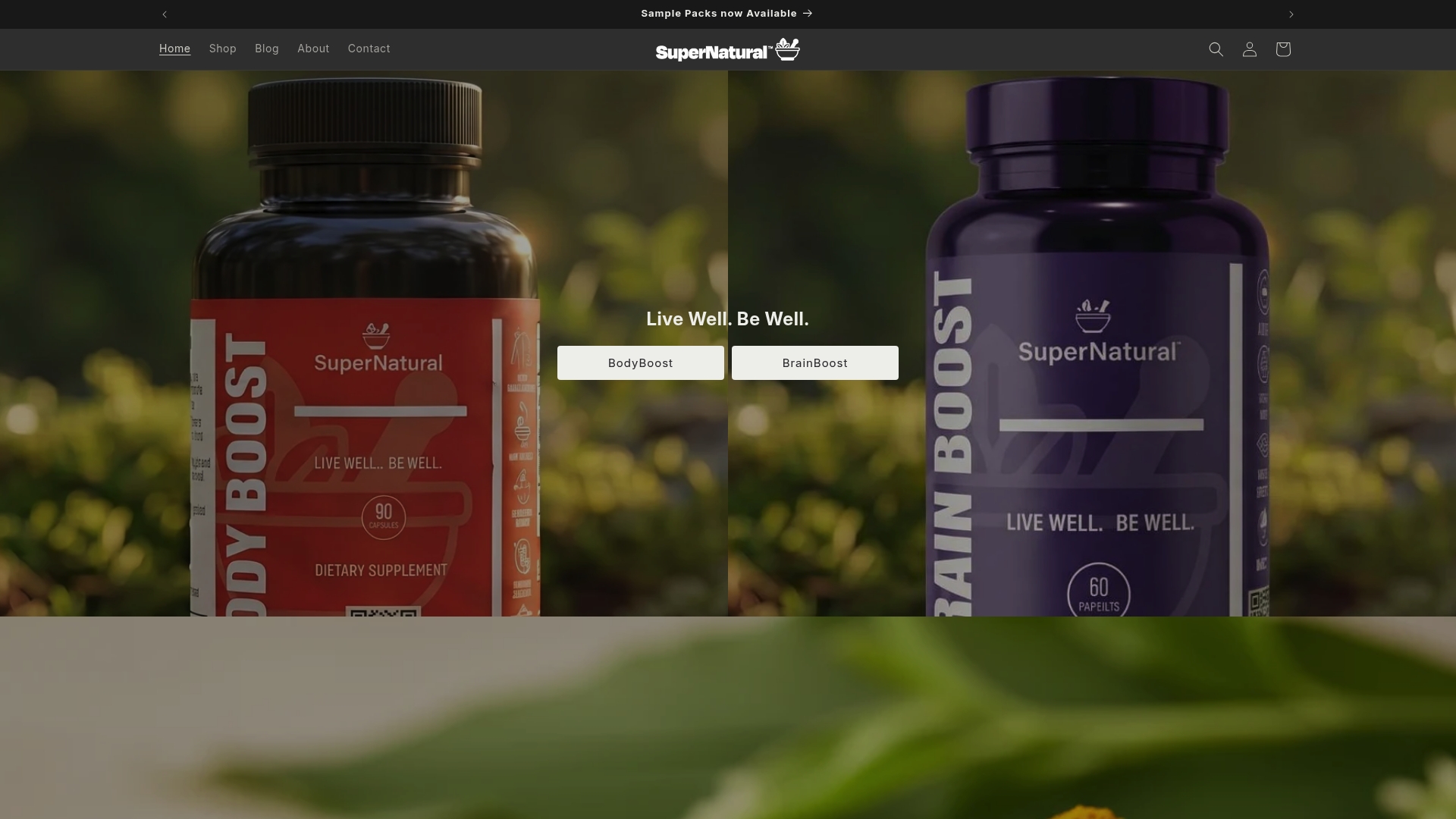
Our patented BioSoluble Curcumin technology solves the absorption problem that makes standard turmeric products so unreliable, delivering curcuminoids at levels that standard powders simply can’t match. For cognitive function specifically, BrainBoost cognitive support is formulated for advanced mental performance using research-aligned ingredients and enhanced delivery. Explore the full SuperNatural collection to find the right fit for your inflammation, immunity, or cognitive goals. These are supplements built around the science, not around the marketing.
Frequently asked questions
What are the main advantages of natural supplements over synthetic ones?
Natural supplements often provide better absorption thanks to cofactors and tend to have fewer side effects than synthetic alternatives, as natural compounds absorb more efficiently due to the phytonutrients that accompany them.
How long do I need to take natural supplements to notice effects?
Most studies find meaningful benefits after 6 to 24 weeks of consistent use, with significant cognitive improvements in ADAS-Cog and MMSE scores appearing in trials lasting at least six weeks.
Are natural supplements safe to take with prescription medications?
It is important to consult a healthcare provider since interactions are possible and supplement quality and dosing vary enough to make professional guidance essential.
Can natural supplements prevent cognitive decline or dementia?
Evidence for preventing dementia is limited, and strong proof for prevention remains lacking; a healthy diet and lifestyle are still most strongly supported by research for long-term brain protection.
Recommended
- BrainBoost: Advanced Cognitive Support – SuperNatural
- SuperNatural BrainBoost
- SuperNatural Supplements | BioSoluble® Curcumin™
- SuperNatural Supplements
This article is provided for educational and informational purposes only and does not constitute providing medical advice or professional services. Always consult with a qualified and licensed physician or other medical care provider. Statements have not been evaluated by the Food & Drug Administration. This product is not intended to diagnose, treat, cure, or prevent any disease.