

Cognitive nutrition is the practice of using targeted dietary strategies to actively support brain function, mental clarity, and long-term cognitive resilience. This field, formally studied within nutritional neuroscience, goes well beyond simply fueling the brain. Dietary inputs shape neural signaling, neuroimmune function, and even gene expression. A Harvard study involving 159,347 participants found that adherence to a DASH-style diet in midlife reduces the risk of self-reported cognitive decline by 41%. That figure tells you something critical: what you eat in your 40s and 50s shapes the brain you live with in your 70s. Established dietary frameworks like the Mediterranean, DASH, and MIND diets are the most validated tools available for protecting cognitive performance over time.
What key nutrients are essential for supporting cognitive function?
The brain is approximately 60% fat, which makes lipid-based nutrients non-negotiable for healthy brain structure. That composition explains why omega-3 fatty acids, specifically EPA and DHA (eicosapentaenoic acid and docosahexaenoic acid), sit at the top of every serious brain health nutrition list. Low intake of EPA and DHA links directly to increased risk of neurodegenerative disease, including Alzheimer’s. These fatty acids maintain neuronal membrane integrity and reduce neuroinflammation, the low-grade brain inflammation that quietly erodes cognitive performance over years.
Beyond omega-3s, several other nutrient categories play distinct roles in brain health:
- Antioxidants and polyphenols (from berries, leafy greens, and dark chocolate) neutralize oxidative stress, which damages neurons over time.
- B-complex vitamins, including folate, B6, and B12, support neurotransmitter synthesis and protect against homocysteine buildup, a compound linked to cognitive decline.
- Choline (found in eggs and liver) is a precursor to acetylcholine, the neurotransmitter central to memory and learning.
- Vitamin K supports sphingolipid metabolism, a process tied to brain cell survival and cognitive function.
- Magnesium and zinc regulate synaptic plasticity, the brain’s ability to strengthen connections between neurons.
One critical point: micronutrient excess can impair synaptic function just as severely as deficiency. Mega-dosing on isolated supplements without clinical guidance is not a shortcut. Whole-food sources deliver nutrients within a matrix of cofactors that the body processes more safely and effectively.
Pro Tip: If you want to support nutrients for mental clarity, prioritize food first. Think of a supplement as a complement to a solid diet, not a replacement. Like wanting a strong cup of coffee instead of just sniffing the beans, the full matrix matters.
How do dietary patterns influence brain aging and cognitive resilience?
Single nutrients matter, but the pattern of your entire diet shapes your brain’s aging trajectory more powerfully than any one food. Nutrition functions as an active signaling network that modulates gene expression, synaptic integrity, and neuroimmune responses across your lifespan. This means your daily food choices are not passive fuel. They are biological instructions your brain reads continuously.

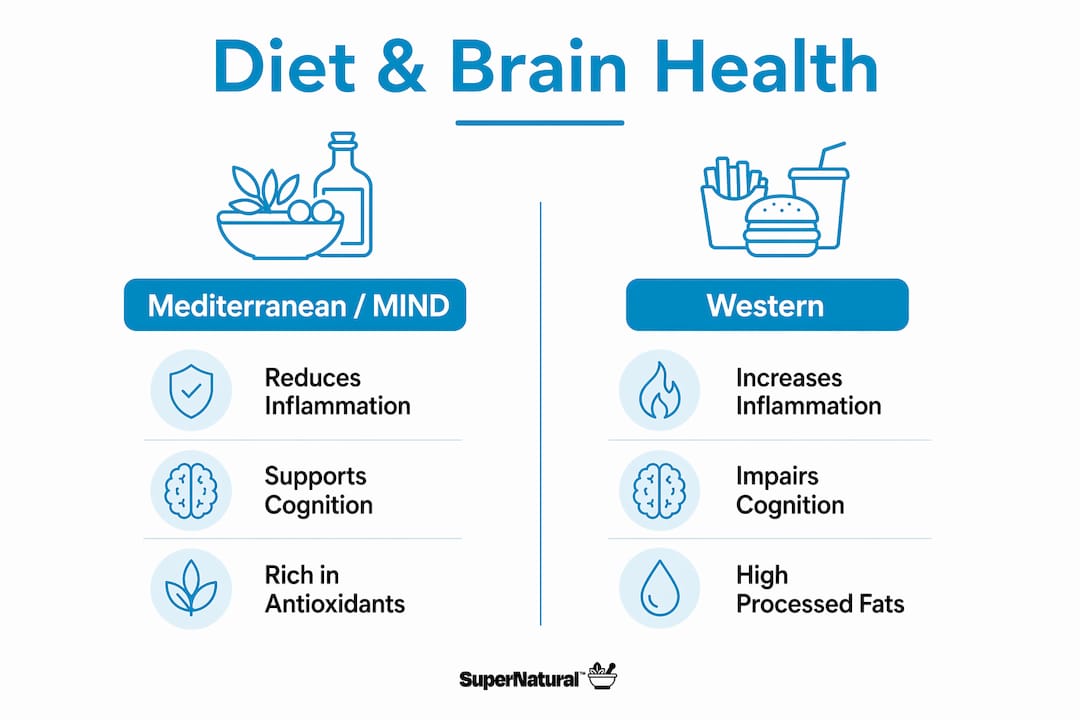
The Mediterranean diet and the MIND diet (Mediterranean-DASH Intervention for Neurodegenerative Delay) are the two most studied dietary patterns for cognitive protection. Both emphasize plant-based foods, fatty fish, legumes, nuts, and extra-virgin olive oil while limiting red meat, processed foods, and refined sugars. The anti-inflammatory nature of these diets reduces the neuroinflammation that accelerates brain aging. They also support microbiome diversity, which matters because brain fog links directly to gut-brain axis dysfunction, not just to individual nutrient gaps.
The contrast with a Western-style diet is stark. High intake of processed carbohydrates, trans fats, and added sugars promotes systemic inflammation, disrupts the gut microbiome, and impairs the blood-brain barrier. These effects compound over decades. The Mediterranean pattern, by contrast, supports sleep quality, reduces cortisol-driven inflammation, and preserves the epigenetic markers associated with healthy brain aging.
Pro Tip: You do not need to overhaul your diet overnight. Swap refined grains for whole grains, add one serving of fatty fish per week, and replace processed snacks with a handful of walnuts or blueberries. Small, consistent shifts accumulate into real cognitive protection.
The table below summarizes how two major dietary patterns compare on key brain health dimensions:
| Dimension | Mediterranean/MIND diet | Western-style diet |
|---|---|---|
| Neuroinflammation | Reduces via anti-inflammatory fats and polyphenols | Promotes via trans fats and refined sugars |
| Gut-brain axis | Supports microbiome diversity with fiber-rich foods | Disrupts microbiome with low fiber and additives |
| Oxidative stress | Counters with antioxidants from produce and olive oil | Increases with processed food-driven free radicals |
| Epigenetic regulation | Supports healthy gene expression patterns | Disrupts gene expression linked to brain aging |
| Cognitive decline risk | Linked to 41% lower risk with DASH-style adherence | Associated with faster cognitive decline trajectories |
Which foods and supplements effectively support mental clarity?
Specific foods carry the strongest evidence for protecting and improving cognitive performance. Higher consumption of berries, nuts, leafy greens, and moderate seafood correlates with slower cognitive decline in older adults. That correlation holds across multiple longitudinal studies and diverse populations. The cognitive benefits come from the combined effect of polyphenols, omega-3s, antioxidants, and fiber working together in whole-food form.
Clinical recommendations for a cognitive performance diet include specific targets worth knowing:
- Leafy greens: at least 5 servings of vegetables daily (spinach, kale, and arugula are top choices for vitamin K and folate).
- Berries: 4 servings of fruit daily, with a strong preference for blueberries and strawberries for their anthocyanin content.
- Fatty fish: 3 servings per week (salmon, sardines, and mackerel deliver the highest EPA/DHA concentrations).
- Extra-virgin olive oil: more than 7 grams daily as your primary cooking fat.
- Nuts and seeds: a daily handful of walnuts, almonds, or flaxseeds for omega-3s and vitamin E.
- Complex carbohydrates: oats, quinoa, and legumes provide steady glucose, the brain’s preferred energy source, without the spikes that impair focus.
On the supplement side, the evidence is more nuanced. Omega-3 supplements benefit people with documented low intake, but they do not replicate the full effect of eating whole fish. Probiotics show promise for supporting the gut-brain axis, but unsupervised use carries risks, particularly for people with immune conditions. Curcumin, the active compound in turmeric, has attracted significant research attention for its anti-inflammatory properties and potential role in brain health support. Bioavailability is the key challenge with curcumin. Standard curcumin absorbs poorly, which is why delivery technology matters when choosing a curcumin-based supplement.
Reducing pro-inflammatory foods is as important as adding beneficial ones. Processed meats, sugary beverages, refined flour products, and seed oils high in omega-6 fatty acids all promote the neuroinflammation that degrades cognitive clarity over time. For a practical framework on attention and cognitive support through nutrition, the evidence consistently points back to whole foods first.
Pro Tip: Pair your leafy greens with a healthy fat source. Vitamin K is fat-soluble, meaning your body absorbs far more of it when you dress your salad with olive oil than when you eat greens plain.
When and how to implement cognitive nutrition strategies for best results?
Timing matters more than most people realize. Early dietary intervention in midlife yields significantly better protective effects for brain aging than changes made after symptoms appear. The brain retains higher neuroplasticity during the 45–54 age window, meaning dietary shifts during this period can genuinely reprogram aging trajectories. Waiting until memory problems surface reduces the impact of any intervention.
Here is a practical sequence for building a cognitive nutrition strategy that sticks:
- Audit your current diet. Track what you eat for one week. Identify where processed foods, refined sugars, and omega-6-heavy oils dominate. You cannot change what you have not measured.
- Shift your fat sources first. Replace butter and seed oils with extra-virgin olive oil. Add fatty fish twice a week. These changes deliver the fastest neurological benefit because of the brain’s high lipid demand.
- Build the plant base. Add one additional serving of leafy greens and one serving of berries daily. These are the two food categories with the strongest longitudinal evidence for memory preservation.
- Stabilize your glucose. Replace white bread, white rice, and sugary snacks with oats, legumes, and whole grains. Stable blood glucose means consistent mental energy without the afternoon cognitive slump.
- Address the gut-brain connection. Add fermented foods like yogurt, kefir, or kimchi to support microbiome diversity. Consult a healthcare provider before starting probiotic supplements, especially if you have any underlying conditions.
- Seek professional guidance for complex cases. Persistent brain fog, significant memory concerns, or inflammation-related cognitive issues warrant clinical evaluation. A registered dietitian or physician can personalize your approach beyond general guidelines.
Sustainable change beats short-term intensity every time. A Mediterranean-style diet adopted gradually and maintained for years protects the brain far more than a strict 30-day protocol followed by a return to old habits. For a step-by-step brain health framework, the core principle is consistency over perfection.
The signal your brain is actually sending
At SuperNatural Supplements, we have spent years looking at the science behind brain health nutrition, and one thing stands out clearly: most people still think of food as fuel. They count calories or track macros, but they miss the deeper story. Your diet is a continuous biological signal. Every meal either dials up or dials down inflammation, gene expression, and synaptic function. That is not a metaphor. That is the mechanism.
The most common mistake we see is the isolated nutrient trap. Someone reads that omega-3s support brain health, so they buy a fish oil capsule and keep eating the same processed diet. The capsule does almost nothing in that context. The Mediterranean diet works because it delivers dozens of bioactive compounds simultaneously, in ratios that the human body evolved to process. No single supplement replicates that.
The second mistake is waiting. The research on midlife intervention is unambiguous. The brain you protect at 48 is the brain you get to use at 78. Starting a whole-food, anti-inflammatory diet in your 40s is one of the highest-return investments you can make in your own future. Starting at 70 still helps, but the window of maximum impact is earlier than most people act on it.
My honest recommendation: build the dietary foundation first. Get the leafy greens, the fatty fish, the berries, and the olive oil into your daily routine. Then, if you want targeted support, work with a healthcare provider to identify where supplementation genuinely fills a gap. That sequence produces real results.
— SuperNatural
SuperNatural Supplements’ BrainBoost for cognitive support
For people who have built a solid dietary foundation and want targeted nutritional support, SuperNatural Supplements developed BrainBoost for advanced cognitive support. BrainBoost is designed to complement a brain health diet, not replace it.
SuperNatural Supplements uses a patented BioSoluble Curcumin process that delivers significantly enhanced bioavailability compared to standard curcumin. Standard curcumin absorbs poorly in the body, which limits its practical benefit. BioSoluble Curcumin addresses that limitation directly. BrainBoost fits within a broader cognitive nutrition strategy that includes whole foods, anti-inflammatory dietary patterns, and professional guidance. As with any supplement, consult your physician before adding BrainBoost to your routine, particularly if you manage existing health conditions or take medications.
FAQ
What is cognitive nutrition?
Cognitive nutrition is the practice of using specific dietary strategies and nutrient intake to support brain function, mental clarity, and long-term cognitive resilience. It draws on nutritional neuroscience to identify how food choices influence neural signaling, neuroinflammation, and brain aging.
Which diet is best for brain health?
The Mediterranean and MIND diets carry the strongest scientific evidence for protecting cognitive function. Both emphasize fatty fish, leafy greens, berries, nuts, and extra-virgin olive oil while limiting processed foods and refined sugars.
Can supplements replace a brain-healthy diet?
Supplements cannot replicate the full effect of a whole-food diet. Micronutrient excess can impair synaptic function, and isolated nutrients lack the cofactors found in whole foods. Supplements work best as targeted additions to an already solid dietary pattern.
When is the best time to start a cognitive nutrition plan?
Midlife, specifically the 45–54 age range, is the most effective window for dietary intervention. Early intervention takes advantage of higher neuroplasticity to shift brain aging trajectories more effectively than changes made after symptoms appear.
What foods most directly support mental clarity?
Berries, fatty fish, leafy greens, walnuts, and extra-virgin olive oil have the strongest evidence for supporting mental clarity and slowing cognitive decline. For natural strategies for better focus, these foods form the core of any evidence-based approach.
Key takeaways
Cognitive nutrition works because diet functions as a biological signal that shapes neuroinflammation, gene expression, and synaptic function across your entire lifespan.
| Point | Details |
|---|---|
| Brain composition drives nutrient needs | The brain is ~60% fat, making EPA/DHA omega-3s critical for neuronal protection and cognitive function. |
| Dietary patterns outperform single nutrients | Mediterranean and MIND diets reduce cognitive decline risk more effectively than any isolated supplement. |
| Midlife is the critical intervention window | Dietary changes in the 45–54 age range yield the greatest protective effect on long-term brain health. |
| Whole foods beat mega-dose supplements | Excess micronutrients can impair synaptic function; whole-food sources deliver safer, more effective nutrient profiles. |
| Gut-brain health is non-negotiable | Brain fog links to gut-brain axis dysfunction; fiber-rich, anti-inflammatory diets address the root cause. |
This article is provided for educational and informational purposes only and does not constitute providing medical advice or professional services. Always consult with a qualified and licensed physician or other medical care provider. Statements have not been evaluated by the Food & Drug Administration. This product is not intended to diagnose, treat, cure, or prevent any disease.