

Healthy aging is defined as the process of maintaining physical, mental, and social well-being as you grow older, and supporting it is the most direct path to resilience, independence, and quality of life across your entire lifespan. The science is clear: genetics explains only 10–30% of lifespan variation, meaning the majority of how you age is shaped by choices you make every day. That shifts the question from “how long will I live?” to “how well will I live?” The answer depends on understanding why support healthy aging matters and what you can actually do about it.
Why support healthy aging: the case for acting now
Supporting healthy aging is not about chasing a longer life. It is about protecting your healthspan, the number of years you spend functioning well, free from debilitating disease and dependency. The modern framework for aging well has shifted decisively: functional capacity, not simply the absence of disease, is now the primary measure of success.

This shift matters because many people live with one or more chronic conditions yet maintain full independence and high quality of life. The goal is to keep the gap between disease presence and functional impact as wide as possible. Research shows that the 70s now resemble the “new 60s” in physical health and the “new 50s” in cognitive function across generations. That is not luck. It reflects decades of better lifestyle choices, preventive care, and targeted support.
The importance of aging well extends beyond the individual. People who maintain functional independence longer contribute more to their families, communities, and the workforce. Supporting healthy aging is both a personal investment and a public health priority recognized by the CDC and the World Health Organization.
What lifestyle factors most strongly support healthy aging?
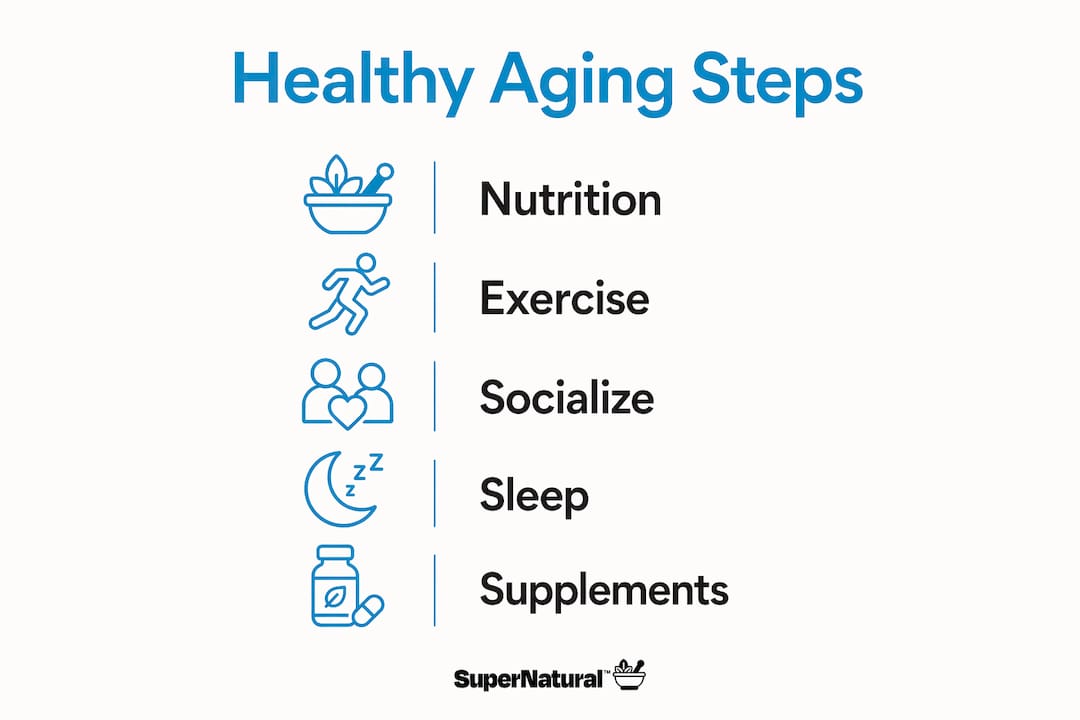
Five evidence-backed pillars drive the benefits of healthy aging. Each one is modifiable, and together they produce results no single habit can match.
- Nutrition. A diet rich in vegetables, fruits, healthy fats (such as olive oil and fatty fish), and adequate protein reduces chronic inflammation and supports cellular repair. The 7–9 hours of sleep target pairs directly with good nutrition to regulate hormones and metabolic function.
- Physical activity. Engaging in varied physical activities reduces all-cause death risk by 19% and cuts mortality from heart disease, cancer, and respiratory diseases by 13–14%. The optimal guideline is 150 minutes of moderate aerobic exercise per week combined with strength training twice weekly.
- Sleep. Seven to nine hours of quality sleep per night supports memory consolidation, immune function, and cardiovascular health. Chronic sleep deprivation accelerates biological aging markers.
- Social connection. Maintaining friendships and community engagement is as protective for brain health as physical exercise. Social isolation raises dementia risk and weakens immune response.
- Preventive care. Regular screenings for blood pressure, blood sugar, cholesterol, and cancer, combined with recommended vaccinations, catch problems before they erode functional independence. Learning how to support immune health naturally complements these clinical steps.
Pro Tip: Do not treat these five pillars as separate tasks. Stack them. A morning walk with a friend covers physical activity, social connection, and mood support simultaneously.
How does supporting healthy aging affect disease prevention and functional independence?
The relationship between lifestyle and disease risk is not theoretical. Varied exercise, combining aerobic, strength, and balance training, reduces mortality risk by up to 19%. That number reflects a consistent pattern across large population studies, not a single trial. The mechanism involves reduced inflammation, better cardiovascular efficiency, stronger muscles that prevent falls, and improved insulin sensitivity.
Functional independence is the real prize. A person can have type 2 diabetes, managed well, and still live fully independently. A person without any diagnosed disease but with severe deconditioning and social isolation may lose independence far earlier. Modern healthy aging frameworks focus on preserving what you can do, not just what you do not have.
| Health domain | Key risk reduced | Primary strategy |
|---|---|---|
| Cardiovascular | Heart disease mortality | 150 min/week aerobic activity |
| Cognitive | Dementia and cognitive decline | Social engagement, sleep, exercise |
| Metabolic | Type 2 diabetes, obesity | Nutrition, strength training |
| Musculoskeletal | Frailty, falls, fractures | Balance and strength exercises |
| Immune | Infection, chronic inflammation | Nutrition, sleep, targeted supplements |
“The gap between disease presence and functional impact has widened due to improved treatments and lifestyle support. The goal is not to eliminate all disease but to prevent disease from eliminating your independence.”
Targeting multiple health domains at the same time produces significantly better outcomes than focusing on a single behavior change. This is why multi-target approaches, addressing nutrition, movement, sleep, and social health together, are now the standard recommendation in aging research.
What practical steps can you take to start aging well at any age?
The most common misconception about aging well is that it requires a perfect start in your 20s. Research dismantles that myth directly. Habits adopted even in the 60s and 70s can maintain independence and slow frailty. The biology is responsive at every stage of life.
Here are five practical steps you can start this week:
- Add variety to your movement. Walk three days, lift weights twice, and practice balance exercises (standing on one foot, heel-to-toe walking) once a week. Diversity in exercise type offers superior mortality protection compared to doing more of just one activity.
- Prioritize sleep as a non-negotiable. Set a consistent bedtime and wake time seven days a week. Treat sleep disruption as seriously as you would a poor diet.
- Schedule one social commitment per week. Join a walking group, a class, or a community organization. Social connection remains one of the most underprioritized factors in brain and emotional health.
- Join a structured program. Structured lifestyle programs with accountability drive greater cognitive and frailty improvements than self-directed efforts alone. Look for guided programs at community centers, hospitals, or senior fitness facilities. For broader strategies, an independent living guide can help you map out practical options.
- Book your preventive screenings. Blood pressure, fasting glucose, cholesterol, and age-appropriate cancer screenings are the early warning system that keeps small problems from becoming large ones.
Pro Tip: Habit stacking works. Attach a new healthy behavior to one you already do reliably. Take your supplements with breakfast. Do balance exercises while brushing your teeth. Small anchors build lasting routines.
How do supplements fit into a healthy aging strategy?
Supplements are not a substitute for the lifestyle pillars above. They are a targeted complement, filling gaps and amplifying what good habits already do. Curcumin and specific cognitive enhancers can reduce chronic inflammation and support brain and immune health when lifestyle alone leaves room for improvement.
The key considerations when choosing supplements for aging support:
- Bioavailability matters more than dose. Standard curcumin has notoriously poor absorption. Think of it like wanting a strong cup of coffee instead of just sniffing the beans. SuperNatural Supplements addresses this directly with its patented BioSoluble Curcumin process, which delivers significantly enhanced bioavailability compared to standard curcumin formulations.
- Target specific needs. Cognitive support, immune function, and inflammatory response each benefit from different compounds. A one-size-fits-all approach rarely delivers meaningful results. Reviewing natural ingredients for cognition and inflammation gives you a clearer picture of what the science actually supports.
- Quality and safety are non-negotiable. Choose products with transparent ingredient sourcing and manufacturing standards. Always check with your doctor before adding supplements, especially if you manage chronic conditions or take prescription medications.
- Consistency produces results. Supplements taken sporadically provide minimal benefit. Pair them with consistent lifestyle habits for measurable impact over time.
Key takeaways
Supporting healthy aging requires consistent, multi-target lifestyle habits combined with targeted nutritional support to protect functional independence and quality of life at every age.
| Point | Details |
|---|---|
| Healthspan over lifespan | The goal is quality years of function, not simply more years lived. |
| Most aging is modifiable | Genetics drives only 10–30% of lifespan variation; lifestyle drives the rest. |
| Exercise variety is critical | Combining aerobic, strength, and balance training reduces all-cause mortality by up to 19%. |
| Social connection is protective | Community engagement and friendships guard brain health as effectively as physical exercise. |
| Supplements complement, not replace | Targeted supplements like BioSoluble Curcumin support aging goals when paired with strong lifestyle habits. |
Aging well is a commitment, not a destination
We have spent years studying what actually moves the needle on healthy aging, and the honest answer is less glamorous than most people expect. There is no single supplement, diet, or exercise that does the job alone. What works is the unglamorous combination of consistent sleep, varied movement, real social connection, and targeted nutritional support, repeated week after week.
What surprises most people is how responsive the body remains even later in life. We have seen adults in their late 60s and 70s make meaningful gains in strength, cognitive sharpness, and energy within months of adopting structured habits. The biology does not stop cooperating just because you waited. It rewards effort at any age.
The part that conventional wellness advice gets wrong is the emphasis on perfection. You do not need a flawless diet or a five-day-a-week gym schedule. You need enough consistency across enough domains to keep your body and mind functioning well. Start with two or three changes. Build from there. Exploring brain health strategies alongside physical habits gives you a more complete picture of what aging well actually looks like in practice.
The science on aging is more optimistic than most people realize. Use it.
— SuperNatural
SuperNatural Supplements for your healthy aging goals
SuperNatural Supplements was built around one core problem: most supplements do not absorb well enough to do what they promise. The patented BioSoluble Curcumin process solves that by delivering curcumin at significantly higher bioavailability than standard formulations, making it genuinely useful for managing inflammation and supporting joint health as you age. BrainBoost provides advanced cognitive support for adults focused on protecting mental sharpness. BodyControl supports detoxification and a healthy inflammatory response, while BodyBoost targets immune function directly. Each product is designed to complement the lifestyle habits covered in this article. Always consult your physician before starting any supplement program.
FAQ
What does healthy aging mean?
Healthy aging means maintaining physical, mental, and social function as you grow older, with the goal of preserving independence and quality of life rather than simply avoiding disease.
Is it too late to start healthy aging habits after 60?
No. Habits adopted in the 60s and 70s can still maintain independence and slow frailty. The body responds to lifestyle improvements at every stage of life.
How much exercise supports healthy aging?
The evidence-backed guideline is 150 minutes of moderate aerobic activity per week combined with strength training twice weekly. Adding balance exercises further reduces fall and mortality risk.
Why is social connection important for aging well?
Social connection protects brain health and emotional resilience as effectively as physical exercise. Isolation raises dementia risk and weakens immune response over time.
Can supplements support healthy aging?
Supplements like curcumin and targeted cognitive enhancers can complement lifestyle efforts by reducing inflammation and supporting brain and immune health. They work best alongside consistent diet, exercise, and sleep habits, not as replacements for them.
This article is provided for educational and informational purposes only and does not constitute providing medical advice or professional services. Always consult with a qualified and licensed physician or other medical care provider. Statements have not been evaluated by the Food & Drug Administration. This product is not intended to diagnose, treat, cure, or prevent any disease.