

Many natural ingredients show impressive results in lab settings, yet only a fraction of them deliver noticeable benefits when you actually swallow a capsule. The gap between potential and performance almost always comes down to one factor: bioavailability, meaning how much of an ingredient your body can actually absorb and use. Understanding which ingredients genuinely work, how they work, and what form they need to be in is the difference between a supplement that changes how you feel and one that simply changes the color of your urine.
Table of Contents
- How natural ingredients impact cognition and inflammation
- Why bioavailability matters: The missing link
- Key natural ingredients for cognitive and inflammation support
- What most guides miss: Synergy, standardization, and the inflammation-cognition connection
- Why bioavailability and synergy outshine trendy ingredients
- Turn knowledge into action with SuperNatural
- Frequently asked questions
Key Takeaways
| Point | Details |
|---|---|
| Science-backed ingredients | Cistanche, Ginkgo, ginger, and curcumin are leading natural options for cognitive and anti-inflammatory support. |
| Bioavailability is crucial | How well your body absorbs ingredients can make or break their effectiveness. |
| Synergistic blends outperform singles | Supplement combinations often show greater results than single extracts. |
| Standardization increases consistency | Choosing standardized extracts ensures you get the right dose and quality every time. |
| Prioritize inflammation-cognition link | Reducing inflammation with natural ingredients can boost both brain and overall wellness. |
How natural ingredients impact cognition and inflammation
With so many people turning to nature for cognitive and inflammatory support, it helps to understand what these ingredients are actually doing inside your body. The short answer is that the best natural compounds work through multiple pathways at once, which is part of what makes them so interesting to researchers.
The three major mechanisms worth knowing are:
- Antioxidant activity: Neutralizing free radicals that damage neurons and trigger systemic inflammation
- Anti-inflammatory pathway modulation: Blocking signaling molecules (like NF-κB) that tell your body to ramp up inflammation
- Neuroprotection: Supporting the growth and survival of brain cells, often through compounds like BDNF (brain-derived neurotrophic factor)
Research has moved well beyond test tubes on this. A 2025 analysis of 27 randomized controlled trials involving 2,334 healthy adults found that plant extract combinations outperform single ingredients. The combination of Cistanche and Ginkgo (called CG) ranked highest for memory (SUCRA 89.3%), executive function (SUCRA 96.9%), and cognitive flexibility (SUCRA 98.0%), while broader extracts like RPTW scored a remarkable SUCRA 95.9% for overall cognition. These are not small effects in isolated cells. These are results in real people.
Ginger, often overlooked in the cognitive conversation, earns its place through its powerful systemic anti-inflammatory effects. A meta-analysis of 29 randomized controlled trials found ginger supplementation significantly reduced CRP (a key inflammation marker) by 0.86 mg/L, TNF-α by 1.90 pg/mL, and IL-6 by 1.15 pg/mL, while simultaneously boosting antioxidant defenses (TAC increased by 0.22 mmol/L, SOD by 48.12 U/L). Since chronic low-grade inflammation is increasingly recognized as a driver of cognitive decline, these numbers matter for brain health too.
| Ingredient | Primary benefit | Key mechanism |
|---|---|---|
| Cistanche + Ginkgo (CG) | Memory, executive function, flexibility | Cholinergic support, antioxidant |
| Ginger | Systemic inflammation reduction | TNF-α, IL-6, CRP suppression |
| Bacopa monnieri | Memory consolidation | Synaptic density, antioxidant |
| Curcumin | Brain and body inflammation | NF-κB inhibition, BDNF support |
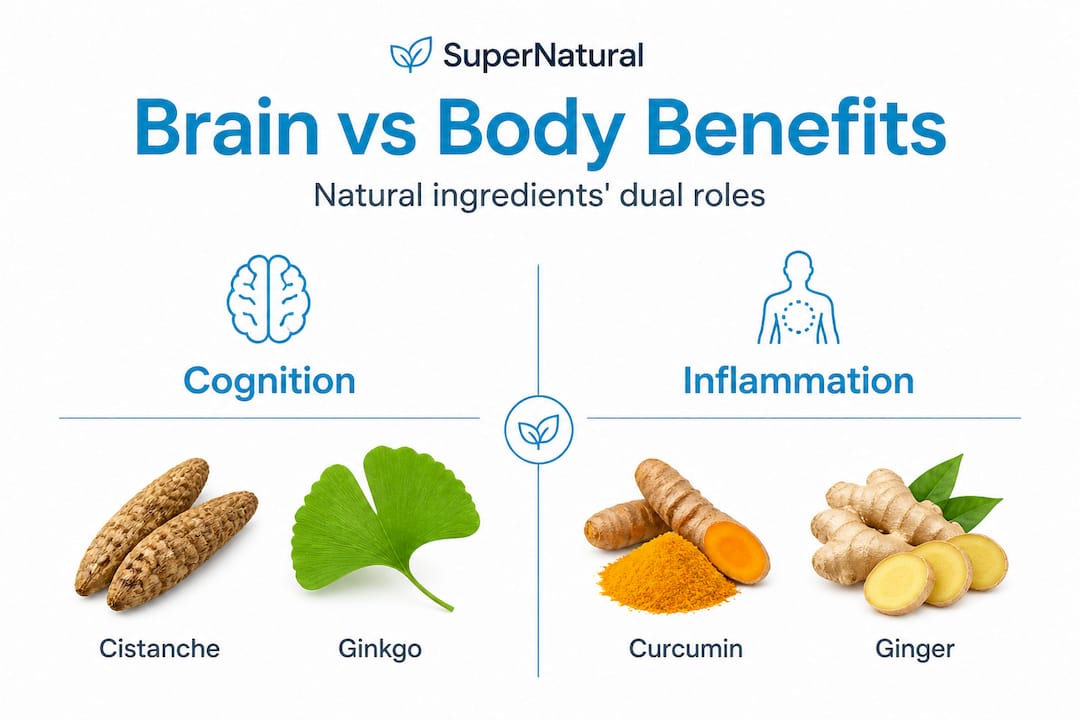
Exploring natural supplements for brain health alongside evidence-based natural health practices reveals that lifestyle factors and supplementation work best together. Pairing the right ingredients with habits that support brain health creates a compounding effect that neither approach achieves alone.
Why bioavailability matters: The missing link
Understanding which ingredients matter is just the start. How your body absorbs them is the true key. Think of it like wanting a strong cup of coffee instead of just sniffing the beans. The active compounds in natural supplements need to cross your gut wall, survive first-pass metabolism in your liver, and reach target tissues in meaningful concentrations. Most standard formulations fail at one or more of these steps.
“Poor bioavailability is not a minor inconvenience. It is the single biggest reason why many supplements fail to replicate the results seen in clinical trials.”
Here is where the numbers get eye-opening. Standard curcumin absorption is notoriously poor due to low water solubility and rapid metabolism. Quercetin in its aglycone form (the free molecule) is absorbed at roughly 20 times lower rates than its glucoside forms. Enhanced delivery systems change this picture dramatically: phytosome technology (binding the active compound to phospholipids) can increase absorption up to 20 times, lecithin-based formulations up to 62 times, and lipid carrier systems offer similar gains.
The four most effective delivery enhancement strategies currently used in premium supplements are:
- Phytosomes: The active compound is chemically bonded to phosphatidylcholine (a fat-like molecule), making it far more compatible with your gut lining
- Nano-formulations: Reducing particle size to nanoscale increases surface area and absorption speed
- Lipid carriers: Encapsulating compounds in fat-soluble matrices that bypass water solubility limitations
- Lecithin complexes: Similar to phytosomes but using lecithin as the carrier, with documented 62x bioavailability gains for certain compounds
Pro Tip: When reading a supplement label, look for words like “phytosome,” “nano-curcumin,” “lipid complex,” or patented delivery names. If the label just says “curcumin extract” with no delivery qualifier, you are likely getting a fraction of the potential benefit.
Knowing how to maximize curcumin absorption is especially valuable because curcumin is one of the most studied natural compounds for both brain and inflammatory health. Pairing that knowledge with integrative evidence-based approaches helps you build a supplement strategy grounded in real science rather than marketing claims.
Key natural ingredients for cognitive and inflammation support
Armed with an understanding of absorption, we can now pinpoint which ingredients deserve a place in your supplement routine. Not every herb that trends on social media has the clinical backing to justify a spot in your daily stack. These four do.
Curcumin is the most researched natural anti-inflammatory compound in existence. Its mechanisms are specific and well-documented: curcumin inhibits NF-κB, MAPK/ERK, and JAK/STAT pathways, which are the molecular switches that turn on pro-inflammatory cytokine production. This is not vague “anti-inflammatory support.” These are named pathways with measurable effects in inflammation-related conditions. The challenge, as discussed above, is getting enough curcumin into your bloodstream to trigger these effects, which is why delivery form is non-negotiable. Learning about curcumin for brain health reveals just how broad its neuroprotective potential really is.
Ginkgo biloba improves cerebral blood flow and acts as a potent antioxidant in neural tissue. It is one of the most studied herbs for age-related cognitive changes and works particularly well in combination with other neuroprotective compounds.

Bacopa monnieri is an Ayurvedic herb with strong evidence for memory consolidation. It works more slowly than some compounds (benefits typically appear after 8 to 12 weeks of consistent use), but the effect on synaptic density and acetylcholine activity is well-supported. Research confirms that dietary herbs including Bacopa, Ginkgo, and Curcuma regulate neuroinflammation by reducing TNF-α, IL-1β, and IL-6 without the side effect profiles associated with pharmaceutical anti-inflammatories.
Ginger rounds out the list as a systemic inflammation modulator with specific benefits for oxidative stress. Its combination of gingerols and shogaols targets multiple inflammatory pathways simultaneously, making it a versatile addition to any anti-inflammatory protocol.
- Curcumin: Best for NF-κB-driven inflammation and neuroprotection; requires enhanced delivery
- Ginkgo biloba: Best for cerebral circulation and cognitive flexibility; works well in combinations
- Bacopa monnieri: Best for memory consolidation; effects build over weeks, not days
- Ginger: Best for systemic inflammation markers (CRP, TNF-α, IL-6); also supports antioxidant status
Pro Tip: If you are new to natural cognitive support, start with a combination product rather than individual herbs. The synergistic effects are better documented, and you reduce the guesswork around dosing multiple separate supplements. The SuperNatural BrainBoost formula is built around exactly this principle.
Understanding the full picture of curcumin benefits and uses also helps you see why it appears in both cognitive and inflammatory support formulas. It genuinely bridges both categories.
What most guides miss: Synergy, standardization, and the inflammation-cognition connection
Beyond picking the right single ingredient, there are deeper strategies that elevate or limit results. Most supplement guides stop at listing ingredients and their individual benefits. That misses three factors that arguably matter more.
Synergy between ingredients is the first. The Cistanche and Ginkgo combination outperforming either ingredient alone is not a coincidence. It reflects a broader principle: plant phytochemicals (the active compounds in herbs) often work through complementary pathways that amplify each other’s effects. Cistanche supports cholinergic function (the acetylcholine system critical for memory), while Ginkgo improves blood flow and antioxidant defense. Together, they cover more ground than either does alone. Exploring brain-boosting synergy in well-designed formulas shows how this principle translates into real product development.
Standardization is the second overlooked factor. A “Bacopa extract” on a label could mean anything from 20% to 55% bacosides (the active compounds). Without standardization, you have no idea what potency you are actually getting. Quality supplements specify the percentage of active compounds, and that number directly determines whether you get a clinical dose or a homeopathic trace. Look for standardization in curcumin products especially, since the curcuminoid content (the active fraction) should be clearly stated.
The inflammation-cognition link is the third piece most guides underplay. Chronic neuroinflammation is not just a symptom of cognitive decline. Increasingly, research points to it as a cause. The molecular mechanisms that drive systemic inflammation, particularly NF-κB activation and oxidative stress, also impair synaptic plasticity, reduce BDNF levels, and accelerate neuron damage. Research confirms that antioxidant and anti-inflammatory pathways including Nrf2/HO-1 activation, NF-κB inhibition, and BDNF support are the core mechanisms through which natural herbs protect the brain. Addressing inflammation is not separate from supporting cognition. It is the same intervention.
“Most cognitive decline is not sudden. It is the slow accumulation of inflammatory damage that compounds over years. The best time to address it is before symptoms appear.”
One more point worth making: the most significant benefits from these ingredients appear with consistent, long-term use. Bacopa takes 8 to 12 weeks. Curcumin’s anti-inflammatory effects build over months of regular supplementation. This is not a weakness. It reflects how these compounds actually work, by gradually modulating pathways rather than forcing acute pharmacological responses. Patience and consistency are part of the protocol.
Why bioavailability and synergy outshine trendy ingredients
We have covered the science, but what really pushes outcomes in the real world? Here is what most brands do not tell you.
The supplement market moves fast. Every year brings a new trending ingredient with exciting preliminary research and aggressive marketing. We have watched this cycle repeat itself many times. Resveratrol, then phosphatidylserine, then lion’s mane, then a dozen others. Some of these ingredients have real merit. But the brands selling them rarely talk about the form, the dose, or the delivery system, because those details are expensive to get right and hard to explain in a social media caption.
Here is the uncomfortable truth: a well-absorbed dose of curcumin in a phytosome or BioSoluble delivery system will outperform a poorly absorbed dose of almost any trendy ingredient. Bioavailability is not a technical footnote. It is the entire ballgame. We have seen people switch from standard curcumin to an enhanced form and report noticeable differences within weeks, not because the ingredient changed, but because their body was finally absorbing enough of it to matter.
The same logic applies to synergy. Single-ingredient supplements are easier to market because the story is simple. But the human body is not simple. Inflammation and cognition involve dozens of interconnected pathways. A formula that addresses three or four of them simultaneously, through complementary ingredients at standardized doses, is almost always going to outperform a single-ingredient product, regardless of how impressive that single ingredient looks in isolation.
Our recommendation: read labels critically, not marketing copy. Look for standardized extract percentages, named delivery systems, and combinations with published clinical data. The real curcumin results speak for themselves when the delivery is done right. Chase the science, not the trend.
Turn knowledge into action with SuperNatural
Ready to harness the best of nature, science, and advanced delivery? Here is where to start.
Everything we have covered, from bioavailability to synergistic combinations, is built into the SuperNatural product line. Our patented BioSoluble® Curcumin™ process delivers dramatically enhanced absorption compared to standard curcumin, so you are actually getting the dose your body needs to support a real anti-inflammatory response and neuroprotective effects.
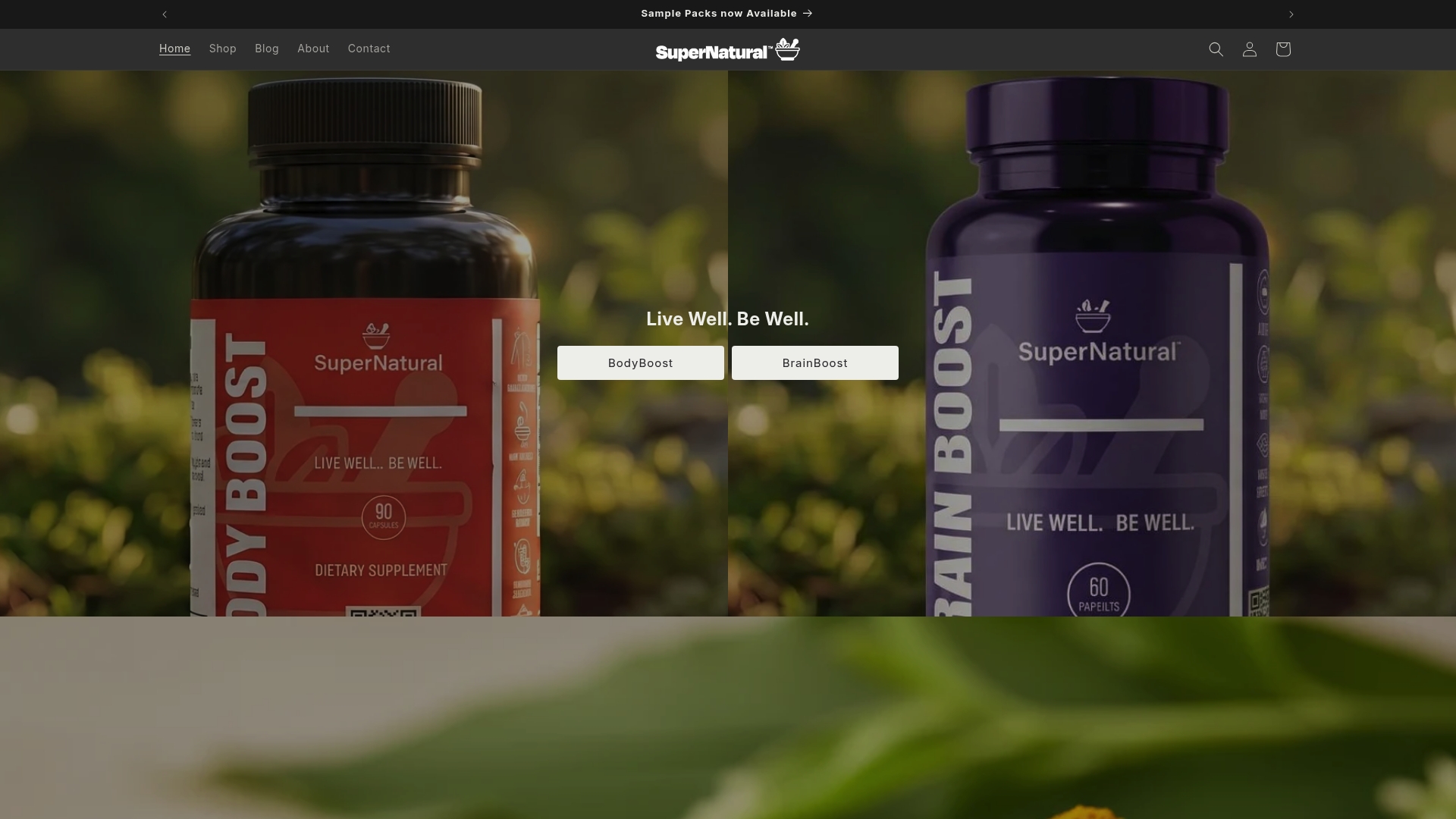
For cognitive support specifically, BrainBoost cognitive support combines advanced curcumin delivery with synergistic ingredients designed for memory, focus, and mental clarity. For broader wellness and immune resilience, BodyBoost for overall wellness brings the same bioavailability-first philosophy to whole-body health. When you know what to look for in a supplement, you can see exactly why these formulas are built differently.
Frequently asked questions
Which natural ingredients are best for cognitive function?
Evidence from 27 clinical trials shows that Cistanche combined with Ginkgo leads for memory (SUCRA 89.3%), executive function (SUCRA 96.9%), and cognitive flexibility (SUCRA 98.0%) in healthy adults. Bacopa monnieri and curcumin also have strong clinical support for long-term cognitive health.
How can I increase absorption of natural supplements?
Choose products with named delivery enhancements: phytosomes boost absorption up to 20 times, lecithin complexes up to 62 times, and lipid carriers offer comparable gains over standard extracts. Look for these terms on the label before purchasing.
Are natural ingredients safer than pharmaceuticals for inflammation?
Research confirms that herbs regulate neuroinflammation effectively without the side effect profiles of pharmaceutical anti-inflammatories, though you should always check with a doctor if you are managing a diagnosed condition or taking medications.
Do single-ingredient or combo supplements work better?
Synergistic combinations outperform single extracts for both cognitive and inflammatory outcomes. The CG (Cistanche plus Ginkgo) combination is a well-documented example of how complementary mechanisms amplify results beyond what either ingredient achieves alone.
What molecular pathways do natural ingredients target?
They primarily target Nrf2/HO-1 and NF-κB pathways for antioxidant and anti-inflammatory effects, along with neuroprotective mechanisms including BDNF upregulation, AChE inhibition, and gut-brain axis modulation.
Recommended
- Natural supplements for brain health and inflammation – SuperNatural
- BrainBoost: Advanced Cognitive Support – SuperNatural
- Curcumin for brain health: Evidence and real impact – SuperNatural
- SuperNatural BrainBoost
- Why advanced supplements boost cognition without stimulants – CP-1
- Top brain health mushrooms for cognitive boost in 2026 – LongevityBotanicals
This web site is provided for educational and informational purposes only and does not constitute providing medical advice or professional services. Always consult with a qualified and licensed physician or other medical care provider. Statements have not been evaluated by the Food & Drug Administration. This product is not intended to diagnose, treat, cure, or prevent any disease.