

Curcumin has earned serious attention as a natural compound with wide-ranging health potential, but finding the right source is genuinely complicated. This compilation of curcumin sources walks you through every meaningful layer of evaluation: botanical origin, raw material grade, extraction method, and formulation technology. The challenge most people run into is that curcumin bioavailability is less than 1% without enhancement, meaning the source you choose and how it’s processed matters enormously. Read this before you buy anything.
Table of Contents
- Key takeaways
- 1. A framework for evaluating any compilation of curcumin sources
- 2. Botanical origins: the plant roots of natural curcumin sources
- 3. Raw turmeric grades: not all curcumin rich foods are equal
- 4. Extraction and purification: how to source curcumin with quality in mind
- 5. Formulations and bioavailability: why delivery technology completes the picture
- 6. How to read curcumin labels without getting misled
- Our perspective on navigating curcumin sources
- Why SuperNatural Supplements takes sourcing seriously
- FAQ
Key takeaways
| Point | Details |
|---|---|
| Botanical origin matters | Curcuma longa is the gold standard; other species lack sufficient human-use evidence. |
| Grade determines starting potency | Medicinal-grade turmeric carries ≥5% curcumin vs. 2–3.5% in culinary powder. |
| Extraction shapes purity | Temperature and solvent ratios directly affect curcuminoid yield and antioxidant activity. |
| Formulation drives absorption | Enhanced delivery formats can increase bioavailability up to 185x over standard curcumin. |
| Labels can mislead | Look for standardized curcuminoid percentages, not just total milligram amounts. |
1. A framework for evaluating any compilation of curcumin sources
Before you compare products or prices, you need a consistent framework. Without one, you’re reacting to marketing claims instead of evaluating real quality. Think of it like buying coffee: the bean variety, the roast level, the grind, and the brewing method all combine to determine what actually ends up in your cup. Curcumin works the same way.
A sound curcumin source guide covers four layers:
- Botanical origin: What plant species did the curcumin come from, and which part of that plant?
- Raw material grade: Was the turmeric or extract sourced from culinary stock or medicinal-quality material?
- Extraction and purification method: What solvents, temperatures, and techniques were used to isolate the curcuminoids?
- Formulation technology: Has the final product been engineered to improve how your body absorbs it?
Standardized curcuminoid composition per USP-NF 2023 specifies that quality extracts contain ≥95% total curcuminoids, broken down as 70–80% curcumin, 15–25% desmethoxycurcumin, and 2.5–6.5% bisdemethoxycurcumin. If a product label doesn’t reflect that breakdown, you don’t actually know what you’re getting.
Pro Tip: Always request a Certificate of Analysis (CoA) from any supplement brand you’re considering. A legitimate CoA shows third-party tested curcuminoid percentages, not just total extract weight. If a brand won’t provide one, treat that as a red flag.
2. Botanical origins: the plant roots of natural curcumin sources
The starting point for any curcumin product is the plant itself. Most of the world’s curcumin comes from Curcuma longa, specifically the underground rhizome (think of the thick, finger-like root you might see at a grocery store). This species has the deepest research base and forms the foundation of every credible supplement on the market.
Other Curcuma species do exist, and some are gaining research attention:
- Curcuma caesia (black turmeric): Contains curcuminoid-like metabolites, but metabolite profiling confirms that evidence for human supplementation is still limited.
- Curcuma zedoaria (white turmeric): Used in traditional medicine but not equivalent to C. longa in curcumin concentration.
- Curcuma amada (mango ginger): Shares the ginger family but contributes negligible curcuminoid content.
The practical takeaway is straightforward. If you’re shopping for health benefits tied to curcumin research, C. longa is the only species with enough human clinical data to justify confidence. Other species may be interesting from an ethnobotanical perspective, but they’re not yet validated sources for targeted supplementation. Stick with what’s proven.
3. Raw turmeric grades: not all curcumin rich foods are equal
Raw turmeric powder is the most accessible natural curcumin source you can find, but calling it a single ingredient undersells how much variation exists between grades. The difference between culinary turmeric and medicinal-grade turmeric is meaningful enough to affect both what you cook with and what you supplement with.
| Turmeric Variety | Grade | Curcumin Content | Primary Use |
|---|---|---|---|
| Standard market turmeric | Culinary | 2–3.5% | Cooking, flavoring |
| Alleppey finger turmeric | Culinary/medicinal | 3–4% | General supplement use |
| Madras turmeric | Culinary | ~2% | Bulk food industry |
| Lakadong turmeric | Medicinal/premium | Up to 9% | High-potency supplements |
Medicinal-grade turmeric typically carries ≥5% curcumin, while standard culinary grades sit at 2–3.5%. Lakadong turmeric, grown in the Meghalaya region of India, is widely considered the premium sourcing choice for supplement manufacturers because its naturally high curcumin concentration reduces the amount of raw material needed per batch, lowering processing cost and increasing potency.
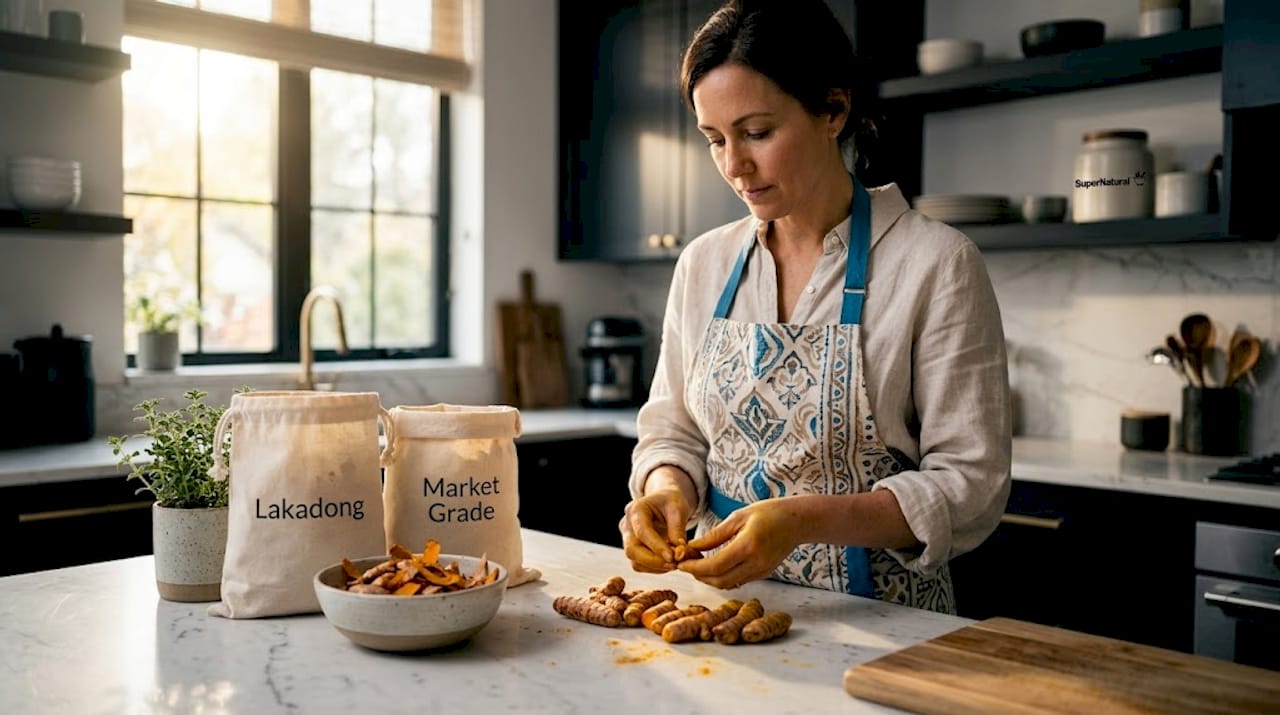
This also matters for anyone relying on food sources. Adding turmeric to your meals can support a healthy inflammatory response, but the curcumin content in culinary powder is too low to replicate what standardized supplements provide. Food and supplementation serve different purposes here.
4. Extraction and purification: how to source curcumin with quality in mind
Raw material grade sets the ceiling, but extraction determines how close you actually get to that ceiling. This is where many supplement buyers stop paying attention, and that’s exactly where quality differences get buried.
Pressurized solvent extraction at 120°C using a 60:40 ethanol-to-water ratio produces the highest curcuminoid yield while preserving antioxidant activity. Push the temperature beyond that threshold, and you actually start degrading the curcumin you worked to extract. More aggressive extraction can inflate total yield numbers while reducing bioactivity. That’s a trade-off suppliers don’t always disclose.
Purification methods matter just as much as initial extraction. Validated quality controls including thin-layer chromatography (TLC) and direct analysis in real time mass spectrometry (DART-MS) can push curcumin purity up to ~95.7%. Without these steps, you get a less concentrated extract with more plant material contamination.
What to look for in a supplier:
- Documented extraction parameters (temperature, solvent type, solvent ratio)
- Third-party purity testing with defined curcuminoid breakdown
- Standardized extract specifications aligned with USP-NF or equivalent pharmacopoeial standards
- Transparency about processing steps and raw material sourcing region
Pro Tip: Extraction conditions beyond optimal temperatures may degrade actual curcumin content even when total extract weight appears high. Ask suppliers for extraction temperature data, not just yield percentages.
5. Formulations and bioavailability: why delivery technology completes the picture
Here’s the part most curcumin articles skip past too quickly. Even a perfectly sourced, properly extracted, high-purity curcumin powder may do very little for you once swallowed. Without formulation enhancement, standard oral curcumin absorbs at less than 1%. That means the vast majority of what you take passes through your system unused.
The supplement industry has responded with several enhanced delivery formats, each with real but different levels of supporting evidence:
| Formulation | Bioavailability Increase | Notes |
|---|---|---|
| Standard curcumin powder | Baseline | Low absorption without enhancement |
| Piperine (BioPerine) co-administration | ~20x | Inexpensive; piperine may affect drug metabolism |
| Meriva (phytosome complex) | ~29x | Well-studied for joint and inflammation support |
| BCM-95 (essential oil matrix) | ~6.9x | Good bioavailability with a simpler formulation |
| Theracurmin (colloidal dispersion) | ~27x | Strong bioavailability; smaller required dose |
| NovaSOL (micellar solubilization) | ~185x | Highest absorption data; limited joint-specific trials |
Enhanced formulations like these show absorption increases ranging from 7x to 185x over standard powder. The right choice depends on your health goals. Meriva has the strongest data for inflammation and joint comfort. NovaSOL leads in pure bioavailability numbers but has fewer condition-specific studies. Piperine is cost-effective but worth a conversation with your doctor if you take medications, since it affects how your liver processes certain compounds.
For anyone exploring curcumin absorption improvements, the core lesson is this: the milligram number on the label is not the whole story. A 500 mg dose of a high-bioavailability format can outperform 2,000 mg of standard powder by a significant margin.
6. How to read curcumin labels without getting misled
This is a practical skill that protects your wallet and your health. Label claims of “curcumin mg” can be misleading when the full curcuminoid composition and the proportion that is actually curcumin (as distinct from desmethoxycurcumin or bisdemethoxycurcumin) go undisclosed.
What a trustworthy label includes:
- Total curcuminoid percentage (ideally ≥95%)
- Individual curcuminoid breakdown: curcumin, desmethoxycurcumin, bisdemethoxycurcumin
- Bioavailability enhancement method (named technology, not vague “enhanced formula” language)
- Botanical source confirmation: Curcuma longa rhizome
- Third-party testing certification or CoA availability
Prioritizing standardized curcuminoid percentages over raw milligram totals will consistently lead you to better products. Two products can list “500 mg curcumin” on the label and differ dramatically in actual active curcumin content depending on what the rest of that extract consists of.
Our perspective on navigating curcumin sources
I’ve spent years working through the layers of curcumin sourcing, and the single biggest lesson I can pass on is this: most of the confusion in this category is manufactured by ambiguous labeling, not genuine complexity.
The taxonomy is actually clean once you understand it. Botanical origin, grade, extraction, formulation. Each layer builds on the last. What I’ve found is that consumers who skip straight to comparing milligram counts are missing the plot entirely. A high-grade Lakadong extract using validated purification and a proven delivery format will outperform a larger-dose standard powder product every time. That’s not an opinion. That’s what the absorption data shows.
My honest advice: ignore products that lead with total curcumin milligrams without disclosing curcuminoid breakdown and delivery technology. And be skeptical of any brand positioning a non-C. longa botanical source as equivalent to established C. longa research. The science simply isn’t there yet. Choose suppliers who show their work. It’s the only way to know what you’re actually buying.
— SuperNatural
Why SuperNatural Supplements takes sourcing seriously
At SuperNatural Supplements, we built our formulations around one central question: what does it actually take to get curcumin into the body at a level that does something meaningful?
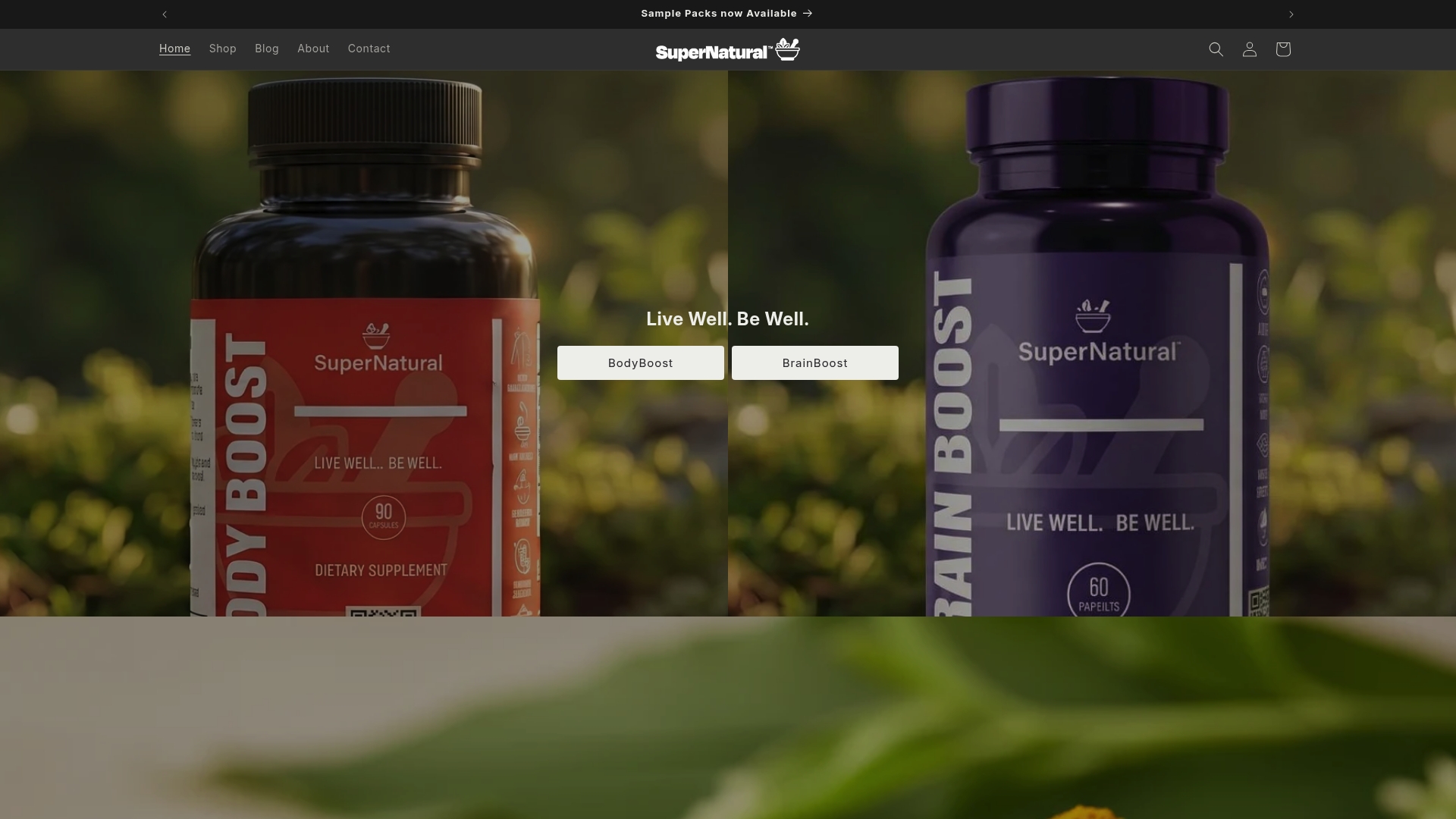
The answer is what became our patented BioSoluble® Curcumin technology. We start with high-grade Curcuma longa extract, apply rigorous quality controls aligned with the standards discussed in this article, and use an absorption-enhancing process designed to address the poor bioavailability that limits standard curcumin products. Our BodyControl product targets a healthy inflammatory response and supports detoxification, while BodyBoost is formulated for immune support and BrainBoost focuses on advanced cognitive performance. If everything you’ve read here has you thinking seriously about upgrading your curcumin source, we’d encourage you to explore what makes BioSoluble® Curcumin different.
FAQ
What is the best botanical source of curcumin?
Curcuma longa rhizome is the primary and most evidence-backed source of curcumin. Other Curcuma species contain related metabolites but lack sufficient human clinical data to be considered equivalent alternatives.
How much curcumin does turmeric powder contain?
Standard culinary turmeric contains roughly 2–3.5% curcumin, while premium medicinal varieties like Lakadong turmeric can reach up to 9%. Grade and growing region significantly affect curcumin concentration.
Why does curcumin bioavailability matter so much?
Standard oral curcumin absorbs at less than 1% without formulation enhancement. Advanced delivery systems like Meriva, Theracurmin, and NovaSOL increase absorption by 20x to 185x, making formulation one of the most important factors in supplement selection.
What should I look for on a curcumin supplement label?
Look for total curcuminoid content of ≥95%, a disclosed breakdown of curcumin versus related curcuminoids, the named bioavailability technology used, and confirmation that the botanical source is Curcuma longa. A third-party CoA is a strong positive signal.
Are curcumin-rich foods enough for health benefits?
Culinary turmeric provides curcumin at levels useful for general dietary support, but the concentration is too low to match what standardized, absorption-enhanced supplements deliver. Food sources and targeted supplementation serve complementary but different roles.
This article is provided for educational and informational purposes only and does not constitute providing medical advice or professional services. Always consult with a qualified and licensed physician or other medical care provider. Statements have not been evaluated by the Food & Drug Administration. This product is not intended to diagnose, treat, cure, or prevent any disease.