

If you’ve ever taken a standard curcumin supplement and wondered why you weren’t feeling any different, you’re not alone. The frustrating truth is that standard curcumin has low oral bioavailability due to poor solubility, rapid metabolism, and limited ability to cross into the central nervous system, which means most of it never reaches the tissues where it matters most. Bioavailable curcumin changes that equation entirely, making it a genuine option for people serious about cognitive support and a healthy inflammatory response.
Table of Contents
- Why bioavailability matters in curcumin supplements
- Key advantages of bioavailable curcumin
- How bioavailable curcumin outperforms regular curcumin
- Choose the right bioavailable curcumin: What to look for
- Expert perspective: The curcumin ‘bioavailability’ puzzle — what really matters?
- Ready to try bioavailable curcumin? Discover trusted solutions
- Frequently asked questions
Key Takeaways
| Point | Details |
|---|---|
| Absorption is crucial | Only bioavailable curcumin can offer measurable benefits for your brain and body. |
| Real benefits take time | Consistent use over months is needed for the best cognitive and anti-inflammatory results. |
| Not all products are equal | Check for clinical data and delivery systems when choosing curcumin supplements. |
| Focus on active forms | Success depends on raising free, pharmacologically relevant curcumin in your system. |
Why bioavailability matters in curcumin supplements
Think of it this way: taking a supplement your body can’t absorb is a bit like wanting a strong cup of coffee but only sniffing the beans. The active compounds in curcumin, called curcuminoids, need to make it into your bloodstream and ultimately into your brain tissue to do anything useful. That’s what bioavailability measures: the fraction of a substance that actually reaches systemic circulation in a form your body can use.
Standard curcumin powder has a well-documented absorption problem. When you swallow a capsule, your gut has a hard time pulling the curcuminoids into the bloodstream. Even when some absorption occurs, the liver and gut wall rapidly convert curcumin into metabolites (broken-down forms) before it can reach target tissues. The curcumin absorption explained process involves three compounding barriers:
- Poor water solubility: Curcumin is hydrophobic, meaning it repels water and doesn’t dissolve easily in your digestive fluids.
- Rapid metabolism: Enzymes in the gut and liver quickly break curcumin down into conjugated forms that may be less pharmacologically active.
- Limited CNS penetration: Even curcumin that does enter the bloodstream struggles to cross the blood-brain barrier, the protective gateway that controls what enters your brain.
As clinical translation research shows, these three hurdles collectively explain why so many standard curcumin supplements produce underwhelming results in human studies, even when animal research looked promising.
“The difference between a curcumin supplement that works and one that doesn’t often comes down to whether the active compound actually reaches the brain, not whether the label says ‘high potency.’”
Understanding why standard curcumin falls short is essential before evaluating any product. Our bioavailable supplements guide goes deeper into what to expect from truly optimized formulations.
Key advantages of bioavailable curcumin
Now that you understand the basics, discover exactly what you gain with a bioavailable product. The benefits aren’t just theoretical. A growing body of human and preclinical research supports real, measurable advantages when curcumin is delivered in a form your body can actually use.
Here are the top evidence-backed advantages worth knowing:
-
Improved cognitive function in older adults. Research confirms that curcumin improves global cognitive function versus placebo, with an optimal dose around 0.8 g per day. Benefits are most consistently seen after 24 weeks or more of consistent use, particularly in older adults and individuals who use highly bioavailable formulations.
-
Reduced neuroinflammation and oxidative stress. Preclinical studies demonstrate that curcumin is linked to reduced oxidative stress and neuroinflammation, including measurable reductions in pro-inflammatory cytokines and improvements in cognitive performance markers. Cytokines are chemical messengers in the body that drive inflammation, and high levels of certain cytokines are associated with cognitive decline.
-
Faster and more reliable absorption. Advanced delivery systems allow curcumin to enter the bloodstream more efficiently and sustain higher plasma concentrations for longer, giving your body more time to use it effectively. This matters especially for brain support, where consistent exposure is critical.
-
Better value per dose. When absorption is optimized, you need less total curcumin to achieve meaningful blood levels. That means your supplement is working harder for you, not just passing through.
-
Systemic anti-inflammatory support. Beyond the brain, bioavailable curcumin supports a healthy inflammatory response throughout the body, which is why it’s relevant for joint comfort, gut health, and general wellbeing.
Pro Tip: When evaluating a curcumin product, look for companies that publish data on blood-level curcumin achieved in human subjects, not just the amount of curcumin per capsule. Total curcumin in a pill and curcumin that actually reaches your tissues are very different numbers.
Reading more about curcumin for brain health and curcumin and inflammation will give you a stronger foundation for evaluating your options. For a broader view of how this fits into your wellness strategy, our natural brain health support article is a good next read.
How bioavailable curcumin outperforms regular curcumin
To cut through marketing claims, let’s see how these options compare head to head. The table below lays out the practical differences between standard curcumin and bioavailable formulations.
| Feature | Standard curcumin | Bioavailable curcumin |
|---|---|---|
| Absorption rate | Very low (~1% or less) | Significantly higher with enhanced delivery |
| Metabolism speed | Rapid conjugation in gut and liver | Slowed by protective delivery systems |
| Free (active) curcumin in blood | Extremely low | Measurably higher with optimized products |
| CNS penetration | Limited | Improved with certain delivery technologies |
| Effective dose | Often requires very high amounts | Lower doses can produce meaningful results |
| Clinical evidence | Mixed results in human trials | Stronger outcomes in enhanced-delivery trials |
| Cost efficiency | Low absorption means poor value | Higher bioavailability improves value per dose |
One important nuance that even experienced supplement users often miss: not every product marketed as “bioavailable” actually delivers higher levels of the active form of curcumin in your body. Research shows that plasma levels of unconjugated curcumin often stay very low even when total curcumin exposure appears higher on paper. This distinction between “total curcumin” and “free curcumin” (the pharmacologically active, unconjugated form) is a critical gap that many marketing claims gloss over.
Piperine (the active compound in black pepper extract) is commonly added to curcumin supplements because it can enhance oral bioavailability by roughly 20-fold. Modern approaches like micelles and nanoparticles go even further in protecting curcumin during digestion. However, a higher “total curcumin” number doesn’t automatically mean better results if the active fraction remains negligible.
This is precisely why our BioSoluble Curcumin™ details page focuses on the science behind the delivery process, not just the milligrams on the label. If you want to maximize curcumin absorption, the delivery technology is where the real difference is made.
Choose the right bioavailable curcumin: What to look for
Ready to choose? Here’s a practical checklist for selecting a truly effective bioavailable curcumin. With so many products making impressive claims, a clear-eyed evaluation framework saves you money and helps you get real results.
Green flags to look for:
- Documented delivery system. Look for specific technologies listed on the label or product page: water-dispersible micelles, nanoparticles, phospholipid complexes (phytosomes), or clinical-grade piperine. Vague terms like “enhanced formula” without technical backing are a warning sign.
- Human clinical trial data. Animal studies can be suggestive, but human pharmacokinetic data (PK data, which measures how a substance moves through the body over time) is what you really want to see. Ask whether the company has published or cited peer-reviewed trials using their specific formula.
- Dose transparency. Research points to an optimal dose around 0.8 g per day, with benefits dependent on consistent, long-term use of 24 weeks or more. Products that don’t disclose curcuminoid content clearly make it impossible for you to match effective study doses.
- Third-party testing. Certificates of analysis from independent labs verify that what’s on the label matches what’s in the capsule.
Red flags to avoid:
- Vague bioavailability claims (“better absorption!”) without citing a delivery mechanism or study.
- Proprietary blends that hide individual ingredient amounts.
- Products emphasizing total curcumin milligrams without addressing free (active) curcumin levels.
- No mention of how long to take the product for results.
Research confirms that bioavailability and formulation differences are a major determinant of both efficacy and safety. Higher-dose exposure from certain enhanced formulas can also affect how the supplement interacts with medications, so it’s worth checking with your doctor if you take prescription drugs.
Pro Tip: Select products that cite human clinical trial evidence specifically for their formulation, not just general research on curcumin as an ingredient. The delivery method changes everything, and a study done on raw curcumin powder doesn’t validate a micelle-based product.
Cognitive benefits are also duration and subgroup dependent, which means choosing the right product is only part of the equation. Sticking with it at the right dose for long enough is equally important. Our bioavailable supplements guide and curcumin science guide offer additional context to help you make that commitment with confidence.
Expert perspective: The curcumin ‘bioavailability’ puzzle — what really matters?
We’ve read through a lot of supplement marketing over the years, and here’s the honest take: the word “bioavailable” has been stretched so thin that it almost doesn’t mean anything on its own anymore. Every company uses it. Very few explain what they actually mean by it.
What the research increasingly points to is that the type of curcumin reaching your bloodstream matters more than the raw quantity. Specifically, the key practical nuance for cognitive and anti-inflammatory support is that benefits may depend less on “total curcumin” and more on achieving sufficient exposure to the pharmacologically relevant species, which is often the unconjugated (free) form. Pharmacokinetic studies have repeatedly shown a gap between what’s marketed as “bioavailable” and what actually shows up as free curcumin in the bloodstream.
So what does that mean for you as a buyer? It means you should ask harder questions. Don’t just accept a label claim. Ask whether the company has measured free curcumin levels in humans, and whether those levels are sufficient to produce the effects you’re looking for. Most companies don’t have that data. The ones that do are worth taking seriously.
There’s also a behavioral piece that doesn’t get enough attention. Even a well-formulated curcumin supplement won’t produce results if you take it inconsistently or stop after a month. The 24-week threshold for cognitive benefits is a real finding, not a marketing number. Building a sustainable daily routine is often the single biggest predictor of whether a supplement works for you.
Our perspective is simple: approach curcumin supplements like an informed skeptic, not a passive consumer. Look for natural cognition boosters backed by transparent data, commit to a realistic timeframe, and don’t let flashy milligram numbers distract you from asking what’s actually getting into your brain.
Ready to try bioavailable curcumin? Discover trusted solutions
If the research in this article has made one thing clear, it’s that not all curcumin supplements are created equal and that formulation quality is the deciding factor between a supplement that sits in your cabinet and one that genuinely supports your brain and inflammatory health.
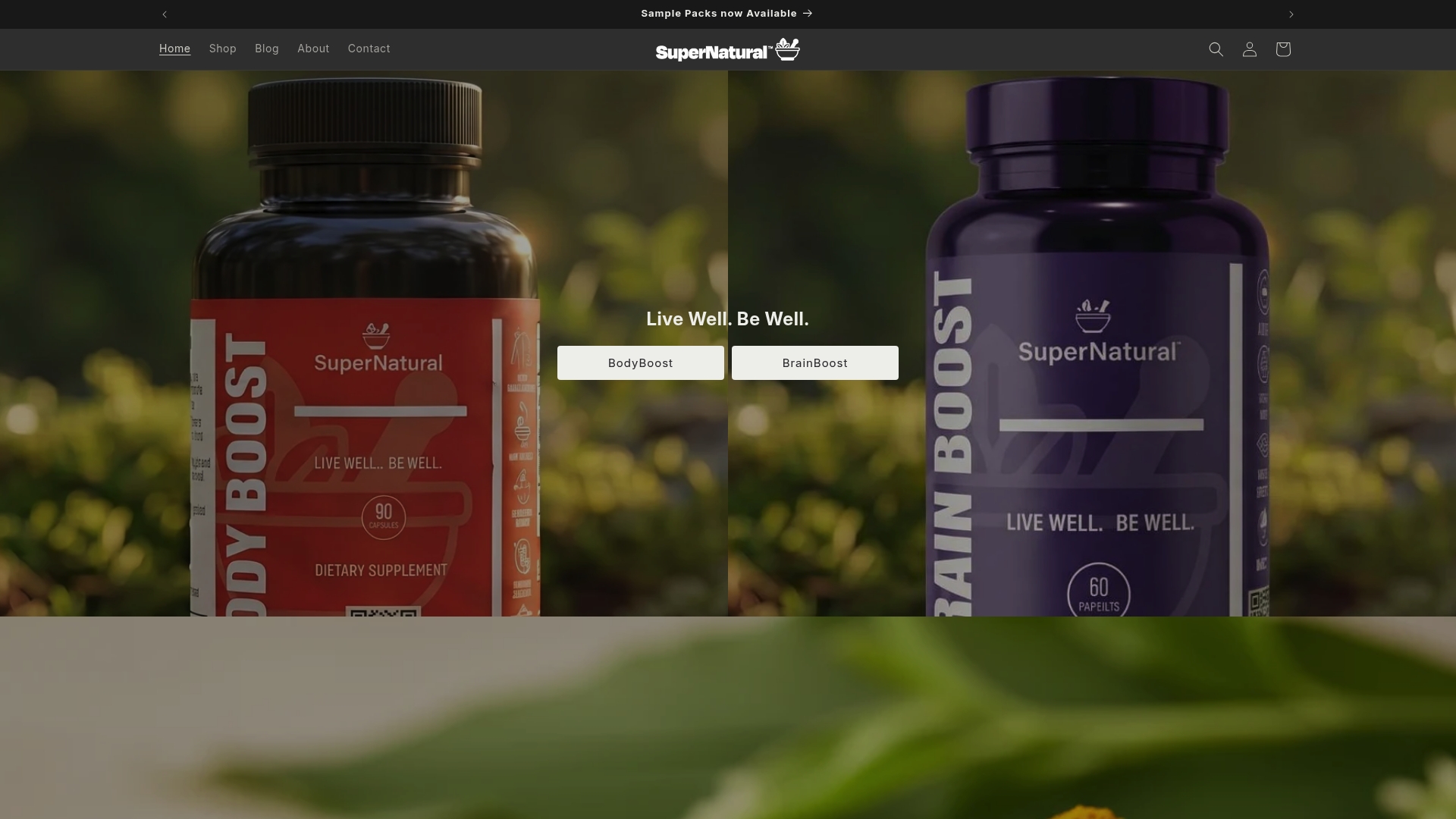
At SuperNatural supplements, we put years of research into our patented BioSoluble® Curcumin™ process precisely because we know how much delivery technology matters. Our BrainBoost cognitive support formula is built specifically for people who want advanced cognitive support using curcumin that’s formulated to actually reach the brain. If you’ve been frustrated by supplements that didn’t deliver, the difference is in how the curcumin gets to where it needs to go. Explore our formulations and see the science behind the process for yourself.
Frequently asked questions
What makes curcumin bioavailable?
Bioavailable curcumin uses enhanced delivery systems such as micelles, nanoparticles, or piperine, along with phospholipid complexes, to significantly improve how much active curcumin enters your bloodstream after you take it.
Who benefits most from bioavailable curcumin?
Older adults, individuals dealing with higher inflammation, and those seeking cognitive support tend to benefit most, particularly when using highly bioavailable formulations consistently for at least 24 weeks.
Does piperine always make curcumin more effective?
Not necessarily. While piperine can enhance absorption overall, a crossover pharmacokinetic study found that piperine provided no meaningful benefit in raising the active unconjugated curcumin levels, which are the form most relevant to cognitive and anti-inflammatory effects.
How long does it take to see benefits from bioavailable curcumin?
Clinical studies consistently report that meaningful cognitive benefits appear after at least 24 weeks of consistent use at effective doses, so patience and adherence are essential parts of the process.
Are all bioavailable curcumin products equally effective?
No. Products differ significantly in their ability to raise active (free) curcumin in the body. Research shows that plasma levels of unconjugated curcumin often remain very low even when total curcumin exposure is reported as higher, making formulation quality and clinical evidence the most important factors to evaluate.