

Most supplements sitting in your cabinet right now are probably doing very little. Not because the active ingredients are wrong, but because your body can’t absorb them in the forms they’re delivered. It’s a bit like wanting a strong cup of coffee but only sniffing the beans. The potential is there, the delivery is broken. Bioavailability, meaning how much of a supplement actually enters your bloodstream and gets to work, determines everything. This guide walks you through exactly how to choose, time, and optimize supplements for focus, inflammation management, and overall wellness, so you stop wasting money and start seeing real results.
Table of Contents
- Understanding bioavailability: What it means for your supplements
- Step-by-step: How to choose bioavailable supplements for focus and wellness
- Troubleshooting inflammation: Picking and using bioavailable curcumin
- Verification and optimization: Maximize absorption with timing and combinations
- Why evidence and form matter more than hype in supplements
- Discover bioavailable supplements that truly deliver results
- Frequently asked questions
Key Takeaways
| Point | Details |
|---|---|
| Choose bioavailable forms | Pick supplement forms proven to absorb better, like magnesium glycinate, methylated B-vitamins, and fat-solubles with food. |
| Evidence beats hype | Focus supplement stacks like caffeine/L-theanine deliver results backed by research, unlike trendy but unproven options. |
| Curcumin needs advanced form | For inflammation, look for curcumin products using NovaSOL or similar technology for real absorption—not just piperine combos. |
| Optimize timing | Taking supplements at the right time with the right meal improves their bioavailability and avoids cross-interference. |
| Track impact | Monitor your supplement regimen and adjust using verified bioavailable products to see measurable improvements in focus and wellness. |
Understanding bioavailability: What it means for your supplements
Now that you know the challenge, let’s break down what bioavailability really means so you can recognize effective supplement options.
Bioavailability is simply the percentage of a nutrient or compound that your body absorbs and uses after you take it. Two products can contain the identical ingredient at the same dose, yet deliver completely different outcomes depending on the form used. This is the detail that most label-reading guides skip entirely, and it’s the one that matters most.
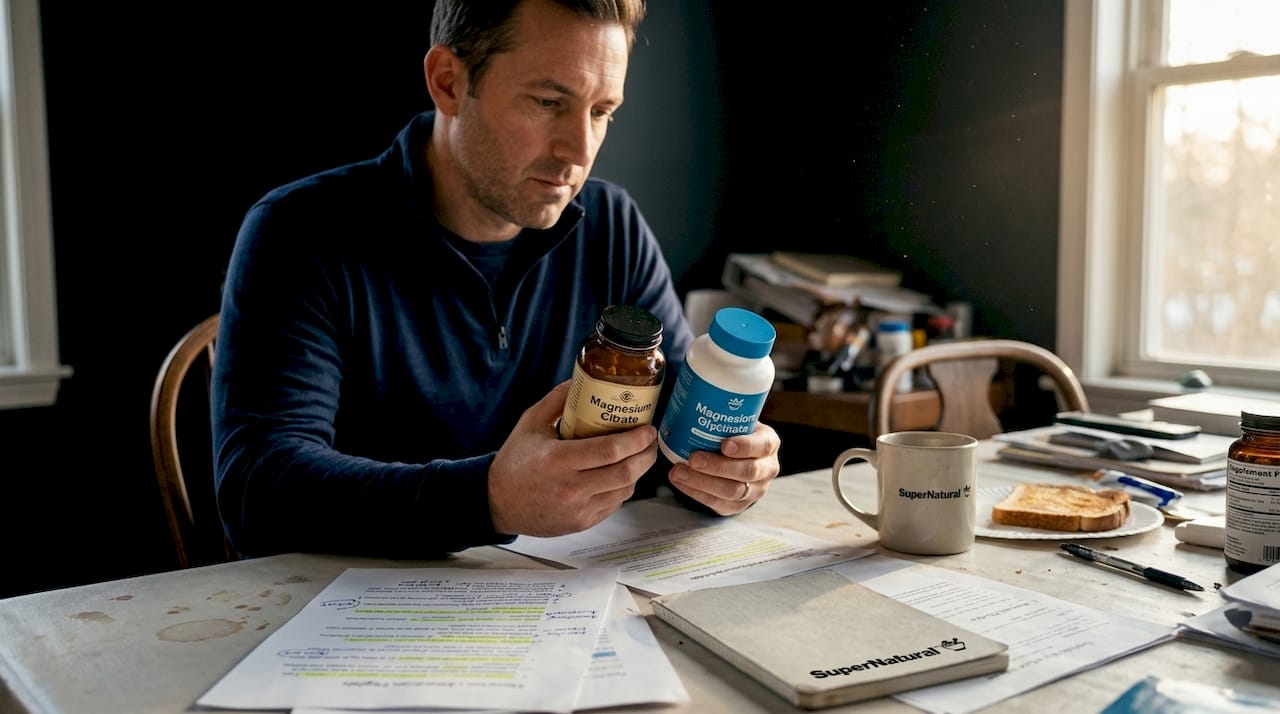
Take magnesium as a clear example. Magnesium glycinate and malate absorb at 33% or more, while magnesium oxide, the form found in the cheapest supplements on the shelf, absorbs at roughly 4%. That’s not a minor gap. That’s the difference between getting a meaningful dose and flushing most of your money down the drain. About 30 to 40% of magnesium from whole food sources gets absorbed under normal conditions, which is the baseline to beat.
The same principle applies across the board. B-vitamins are most effective in methylated forms (methylcobalamin for B12, methylfolate for folate), especially for people with MTHFR gene variants who can’t efficiently convert standard forms. Fat-soluble vitamins (A, D, E, K) require dietary fat to absorb properly. Water-soluble vitamins generally pass through faster, so timing matters more. Exploring bioavailable supplement forms before you buy gives you a real edge over choosing by price or brand recognition alone.
Common absorption pitfalls to avoid
- Choosing by marketing: Flashy claims on labels don’t tell you the form. Always check the ingredients panel for the specific chemical form of each nutrient.
- Ignoring fat with fat-soluble vitamins: Taking vitamin D or K2 on an empty stomach dramatically reduces what you absorb.
- Buying oxide or carbonate forms of minerals: These are inexpensive for manufacturers but nearly useless in the body.
- Megadosing poor forms: More of a poorly absorbed form doesn’t fix the bioavailability problem. It just costs more.
Absorption rate comparison by supplement form
| Supplement | Low-absorption form | Better form | Approximate absorption difference |
|---|---|---|---|
| Magnesium | Oxide (~4%) | Glycinate/Malate (33%+) | ~8x higher |
| B12 | Cyanocobalamin | Methylcobalamin | Significantly better in MTHFR variants |
| Folate | Folic acid | Methylfolate | Direct use without conversion |
| Iron | Ferrous sulfate | Ferrous bisglycinate | Gentler, higher uptake |
| Curcumin | Standard powder | BioSoluble/phytosome | Up to 185x difference in studies |
Understanding this table is genuinely half the battle. When you shop with this knowledge, you immediately filter out the majority of underpowered products.
Step-by-step: How to choose bioavailable supplements for focus and wellness
With a good grasp on bioavailability, it’s time to dive into step-by-step real decisions on choosing supplements that drive focus and cognitive wellness.
Cognitive support is one of the most hyped spaces in the supplement industry, and also one of the most littered with weak evidence. Here’s how to navigate it honestly and strategically.
Step 1: Start with what the evidence actually supports. The most consistently proven stack for focus is caffeine paired with L-theanine, typically 100 to 200 mg caffeine with 80 to 200 mg L-theanine. Multiple randomized controlled trials confirm that this combination improves sustained attention, reduces the anxiety and jitter from caffeine alone, and supports mood stability. This is a rare case of a supplement stack being genuinely reliable rather than plausible in theory.
Step 2: Add creatine if you need consistent mental energy. Creatine isn’t just for gym performance. Research shows it supports ATP (energy) production in brain cells, and monohydrate remains the gold standard for absorbability and cost-effectiveness. Three to five grams daily is a well-tolerated, evidence-backed dose.
Step 3: Be skeptical of trendy nootropics without robust data. Lion’s Mane mushroom gets heavy promotion, but current evidence for cognitive benefits in healthy adults is thin. Most studies are small, short, and conducted in populations with existing cognitive decline, not healthy people looking for an edge. This is exactly the type of ingredient that sounds compelling in a product description but lacks the clinical backing to justify your investment.
Step 4: Match the supplement to a specific cognitive goal. Are you targeting memory, processing speed, or just staying alert without crashing? Evidence-backed brain supplements work best when they’re chosen for a defined need, not as a general “brain boost.” For example, bioavailable curcumin has meaningful data for neuroinflammation, which makes it a relevant tool for long-term brain health rather than acute focus. Many cognition-boosting ingredients also support a healthy inflammatory response, making them doubly valuable in a wellness stack.
Step 5: Check that the form will absorb. Even effective ingredients fail if the form is wrong. For curcumin and cognitive support, the standard curcumin powder most supplements use delivers negligible plasma levels. Seek out patented, enhanced delivery formats.
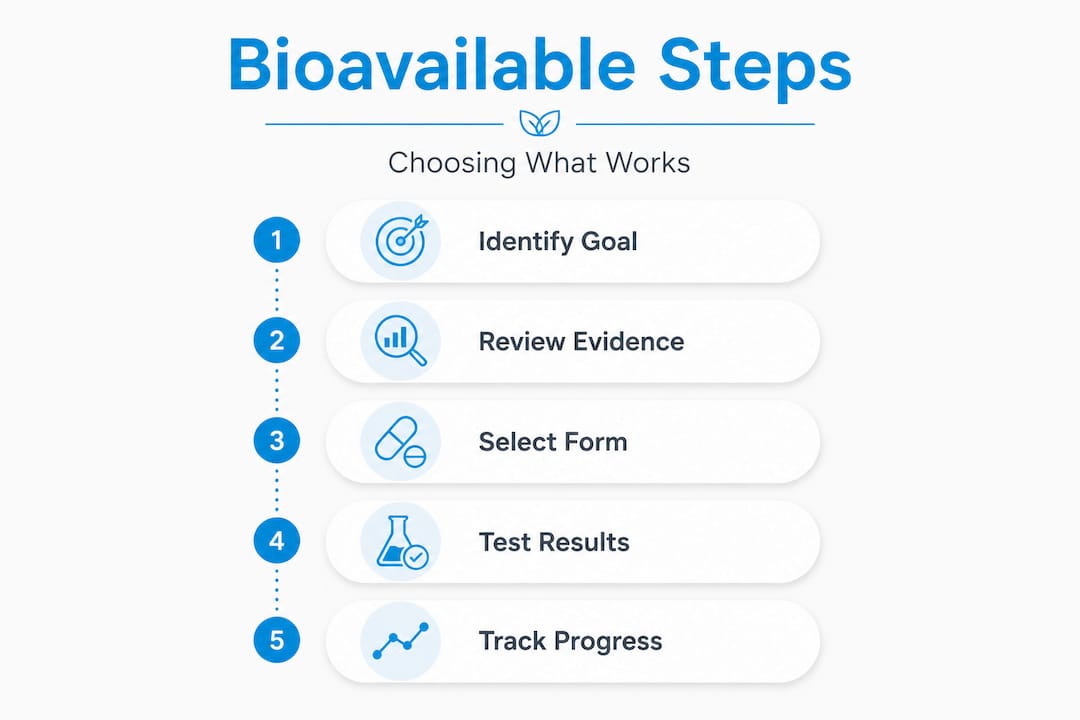
Pro Tip: Before trying anything new, run a two-week single-variable test. Add one supplement at a time, track your sleep, focus, and energy in a simple note each day. You’ll know with confidence whether the change is real or just expectation.
Focus supplement evidence comparison
| Supplement | Evidence quality | Best use case | Key consideration |
|---|---|---|---|
| Caffeine + L-theanine | High (multiple RCTs) | Attention, alertness | Use daily or as needed |
| Creatine monohydrate | High | Mental energy, memory | 3 to 5g daily, consistent use |
| Lion’s Mane | Low to moderate | Theoretical neuroprotection | Limited data in healthy adults |
| Bioavailable curcumin | Moderate to high | Neuroinflammation, long-term | Form is critical for results |
| Bacopa monnieri | Moderate | Memory consolidation | Takes 8 to 12 weeks to show effect |
Troubleshooting inflammation: Picking and using bioavailable curcumin
Once you’ve tackled focus supplements, inflammation is another area where bioavailability, especially for curcumin, makes or breaks results.
Curcumin is the active compound in turmeric, and it’s one of the most extensively studied natural anti-inflammatory compounds in the world. Here’s the uncomfortable reality: most people taking standard curcumin supplements are getting very little systemic benefit. Curcumin is highly lipophilic (fat-loving), poorly water-soluble, and rapidly metabolized in the gut before it ever reaches meaningful plasma concentrations.
Unconjugated curcumin plasma levels remain extremely low, in the range of less than 2 to 38 nanomolar, even when combined with absorption enhancers like piperine. Some research shows piperine provides no significant benefit in certain study populations, meaning the standard “curcumin with black pepper” approach that dominates the market may be offering mostly localized gut effects rather than the systemic anti-inflammatory action people are paying for.
This is where advanced delivery systems change the picture entirely. Technologies like NovaSOL (a water-dispersible curcumin) and phytosome formats bind curcumin to phospholipids, dramatically increasing how much enters circulation. Our own BioSoluble Curcumin process uses a patented approach specifically engineered to solve this absorption barrier, producing plasma levels that standard curcumin simply can’t match.
Understanding curcumin’s full benefits and uses helps you evaluate whether any given product is designed to deliver them or just riding the turmeric trend.
How to pick a genuinely bioavailable anti-inflammatory supplement
- Look for named delivery technologies: BioSoluble, NovaSOL, Meriva, Longvida, or phytosome formats are meaningful markers of enhanced absorption. “Standardized curcumin extract” without one of these is usually insufficient.
- Avoid products relying solely on piperine: The evidence that black pepper extract meaningfully raises systemic curcumin levels is weaker than the marketing implies.
- Check dose context: Even with the best delivery system, chronically low doses won’t produce measurable inflammatory support. Look for products that disclose the enhanced-form dosage clearly.
- Pair with a healthy fat if your format allows: Some curcumin formats are already formulated with lipid carriers. Others still benefit from being taken with a fat-containing meal.
- Prioritize transparency: Reputable brands will cite the specific absorption data behind their delivery system. If a brand only mentions “high potency,” that’s a red flag.
Verification and optimization: Maximize absorption with timing and combinations
Now, let’s make sure the supplements you choose actually deliver by optimizing timing, stacking, and simple verification strategies.
Getting the right forms is step one. Getting the timing and combinations right is what transforms a decent supplement routine into one that genuinely performs. Small adjustments here can make a meaningful difference without adding complexity to your day.
Timing basics that matter:
- Fat-soluble vitamins (D, K, E, A) should always be taken with a meal containing dietary fat. This isn’t optional. Without fat present, absorption drops significantly.
- Water-soluble vitamins (most B-vitamins, vitamin C) absorb adequately on an empty stomach and clear faster, so morning dosing often works well.
- High zinc intake interferes with magnesium absorption because both minerals compete for the same transporters in the gut. If you’re taking both, separate them by several hours or take magnesium at night (where it also supports sleep quality) and zinc at a different meal.
- Curcumin in a BioSoluble or lipid-based format can often be taken with or without food depending on the specific product design. Always check the manufacturer’s guidance.
Timing your supplements around brain health habits like sleep and exercise also amplifies results. Magnesium taken before bed, for example, supports both sleep quality and overnight recovery processes that matter for cognition.
Verify your results and optimize over time
- Track a baseline first: Before starting a new supplement, rate your target metrics (energy, focus, inflammation symptoms, sleep) on a simple 1 to 10 scale for one week.
- Run single-variable trials: Introduce one new supplement at a time and wait at least three to four weeks before evaluating. Many supplements, especially those targeting neuroinflammation, take time to build to effective tissue levels.
- Watch for interference signals: Digestive discomfort, unusual fatigue, or disrupted sleep after adding a new supplement can signal a timing conflict or a form your gut doesn’t tolerate well.
- Retest your baseline metrics after 30 days: Compare honestly. If you see no movement, reassess the dose, form, and timing before concluding it doesn’t work.
- Consult your doctor for bloodwork confirmation: For nutrients like vitamin D, magnesium, and B12, a simple blood panel tells you definitively whether your supplementation is moving the needle.
Pro Tip: Keep your supplement log in the same app you use for your calendar or notes. Consistency of tracking matters more than the tool you use. A brief daily entry takes 30 seconds and gives you real data to act on rather than guesses.
Why evidence and form matter more than hype in supplements
As you refine your supplement routine, it’s vital to examine the broader industry wisdom, what actually works, and what just sounds promising in theory.
We’ve spent years examining supplement research, and the pattern we see repeatedly is this: the gap between what the science actually shows and what the marketing claims is enormous. Not because the companies are always being dishonest, but because supplement marketing moves fast and science moves slow. An animal study or a small pilot trial in elderly patients gets translated into a “clinically proven nootropic” claim that your average buyer has no way to fact-check while standing in an aisle or scrolling through a product page.
Sticking to high-evidence stacks like caffeine with L-theanine or creatine for focus and cognitive energy is genuinely the most defensible approach for healthy adults right now. These are compounds with large, replicated bodies of research, clear mechanisms, and well-established safety profiles. Beyond these, the benefit-to-evidence ratio drops fast for most trendy nootropic blends.
The way to spot the difference between genuine science and marketing is straightforward. Ask three questions: What specific form is used? Is there human clinical data at this dose? What are the plasma concentration results? If a brand can’t answer those three questions clearly, that tells you everything you need to know.
What we believe at SuperNatural is that the most responsible thing we can do for you is be honest about what works and why, rather than filling labels with exciting-sounding ingredients that haven’t proven their worth in the clinic. Choosing why supplement form matters as your filter instead of ingredient lists or marketing claims is the single habit that most consistently separates effective supplement users from disappointed ones.
Discover bioavailable supplements that truly deliver results
Ready to put this guidance into action? Here’s where you can find supplements that walk the talk on bioavailability and evidence.
At SuperNatural, every product we’ve built starts with the same question you should be asking: will this actually absorb? Our patented BioSoluble Curcumin process was developed specifically to solve the plasma-level problem that makes standard curcumin products fall short. BodyControl targets detoxification and a healthy inflammatory response, while BodyBoost supports superior immunity. For cognitive support built on this same bioavailability commitment, our advanced cognitive support supplement BrainBoost is formulated with absorption in mind from the ground up.
If you’re ready to make bioavailability your non-negotiable standard, start with our bioavailable curcumin page to see exactly how BioSoluble technology compares to standard formats. Or explore our full range of bioavailable supplements to find the stack that fits your focus, inflammation, and wellness goals.
Frequently asked questions
What makes a supplement bioavailable?
Bioavailable supplements use forms and delivery methods your body can absorb efficiently, so more of the active ingredient enters your bloodstream rather than passing through unused. For example, magnesium glycinate absorbs at 33% or more, compared to roughly 4% for magnesium oxide.
Are curcumin supplements with piperine effective?
Evidence shows that curcumin with piperine still produces very low plasma levels of unconjugated curcumin, meaning the benefits may be limited to the gut rather than systemic. Advanced delivery formats like BioSoluble or phytosome technologies offer meaningfully better absorption.
Should I take fat-soluble vitamins with food or on an empty stomach?
Always take fat-soluble vitamins (A, D, E, K) with a meal that contains dietary fat to maximize absorption. Water-soluble vitamins absorb well on an empty stomach and are typically best taken in the morning.
What focus supplement stack is most evidence-backed?
Caffeine paired with L-theanine has the strongest evidence for improving attention and reducing jitter, supported by multiple randomized controlled trials. It remains the most reliable and accessible cognitive stack for healthy adults.
Why does high zinc intake interfere with magnesium absorption?
Zinc and magnesium share the same absorption pathways in the gut, so excess zinc reduces magnesium uptake. If you supplement both, separate them by several hours to avoid competition and ensure each mineral is fully utilized.