

The word “natural” carries a lot of weight on supplement labels. Many people assume that if something comes from a plant or the earth, it must be safe, gentle, and effective. That assumption, while understandable, is worth questioning carefully. Botanical dietary supplements are not formally defined or regulated under the term “natural,” meaning the label tells you far less than you might think. This guide cuts through the noise, giving you a clear picture of what natural supplements actually are, how they work, their real benefits and limitations, and how to make genuinely informed choices for your health goals.
Table of Contents
- What is a natural supplement?
- Debunking the myth: Is natural always safe?
- How natural supplements are used: Popular examples and their intended benefits
- Smart supplementing: How to choose and use natural supplements wisely
- Why the ‘natural means better’ mindset can backfire
- Looking for high-quality natural supplements?
- Frequently asked questions
Key Takeaways
| Point | Details |
|---|---|
| Natural not always safer | Natural supplements can carry real risks and side effects, so careful selection is key. |
| Check ingredient sources | Focus on well-sourced, minimally processed ingredients for better safety and efficacy. |
| Evidence quality matters | Look for clinically supported ingredients and transparent product labeling. |
| Regulation is limited | Supplements are regulated as foods, not drugs, so consumer vigilance is crucial. |
| Consult health professionals | Expert guidance is valuable when considering regular or high-dose supplement use. |
What is a natural supplement?
Before understanding if natural supplements are right for you, it’s critical to clarify what the term actually means and how these products are categorized.

Most people use “natural supplement” to mean something plant-derived and minimally processed. That’s a reasonable starting point, but the reality is more layered. A product can legally call itself natural while containing highly processed extracts, synthetic fillers, or ingredients from animal or mineral sources. The word “natural” on a label is essentially a marketing description, not a regulatory one.
What does have a legal definition is “dietary supplement.” According to the NIH Office of Dietary Supplements, a dietary supplement is a product taken by mouth that contains one or more dietary ingredients, including vitamins, minerals, herbs, botanicals, amino acids, or other substances intended to supplement the diet. That’s a broad category. It covers everything from a basic multivitamin to an adaptogenic mushroom blend or a curcumin capsule.
Here’s a quick breakdown of what falls under the “dietary supplement” umbrella:
- Vitamins and minerals: Vitamin D, magnesium, zinc, and others
- Botanicals and herbs: Turmeric, ashwagandha, ginger, echinacea
- Amino acids: L-theanine, glutamine, branched-chain amino acids
- Enzymes and probiotics: Digestive support compounds and beneficial bacteria
- Animal-derived compounds: Fish oil, collagen, glucosamine
The key regulatory context you need to know: according to NCCIH, the FDA treats dietary supplements as a type of food, not as drugs. This is a significant distinction. It means manufacturers do not need to prove safety or efficacy before putting a product on the market. The FDA only steps in after a product is already being sold, and usually only if problems emerge.
| Feature | Dietary supplement | Prescription drug |
|---|---|---|
| Pre-market FDA approval | Not required | Required |
| Evidence of efficacy needed | Not mandatory | Mandatory |
| Label must state “supplement” | Yes | N/A |
| Regulated as | Food | Drug |
| Marketing health claims | Restricted but permitted | Highly regulated |
This regulatory gap is exactly why informed consumers need to do more research before choosing a supplement. Just because something is on a shelf at your local health store doesn’t mean its claims have been independently verified.
Exploring the SuperNatural Supplements collection is a good example of what a research-backed approach looks like in practice. Products like SuperNatural BrainBoost are built around specific, well-researched active ingredients with documented mechanisms of action.
Debunking the myth: Is natural always safe?
With definitions clear, it’s important to address a common and potentially dangerous misunderstanding about these products.
Here’s a reality check: some of the most toxic substances known to science are completely natural. Arsenic is natural. Hemlock is natural. Aconitine, a compound found in the monkshood plant, can be lethal in small doses. The point isn’t to scare you away from plant-based supplements. The point is that “natural” is not a synonym for “harmless.”
“Natural does not automatically mean safe.” The Merck Manual notes that plant-derived substances can affect the body powerfully, with the potential for unwanted side effects, just like synthetic compounds.
This matters enormously for people who are health-conscious and actively trying to improve their wellbeing. The goal is to be intentional, not just to swap pharmaceuticals for plant extracts and assume you’re automatically safer.
Some specific risks worth knowing:
- Drug interactions: St. John’s Wort is a popular herbal supplement for mood support, but it can significantly reduce the effectiveness of birth control, anticoagulants, and certain antidepressants.
- Pre-existing conditions: Licorice root, used in some adrenal and digestive supplements, can raise blood pressure, which is a serious concern for anyone with hypertension.
- Contamination: Without rigorous third-party testing, supplements can contain heavy metals, pesticide residues, or undeclared ingredients.
- Misleading dosages: A product might contain an active ingredient at far below the dose used in research, making it essentially ineffective while still carrying label claims.
Pro Tip: If you’re taking any prescription medication, always check for known interactions before adding a new supplement to your routine. A quick conversation with your pharmacist can save you a lot of trouble.
Understanding the risks of natural supplements is not about fear. It’s about respect for the compounds you’re putting into your body. When you approach natural supplements the same way you would any powerful health tool, you’re in a much stronger position to benefit from them safely.
How natural supplements are used: Popular examples and their intended benefits
Knowing the risks, let’s turn our attention to which natural supplements people commonly use, and what science says about their intended effects.
Plant-derived and botanical supplements are used widely for three primary health goals: supporting cognitive function, managing inflammation, and promoting general immune and metabolic wellness. Each category has ingredients with varying levels of scientific support.
Cognitive support is one of the fastest-growing areas. Popular ingredients here include Lion’s Mane mushroom (studied for nerve growth factor stimulation), Bacopa monnieri (an Ayurvedic adaptogen linked to memory and focus), L-theanine (an amino acid in green tea associated with calm alertness), and Ginkgo biloba (long used for circulation and memory support).
Inflammation support supplements frequently feature curcumin (the active compound in turmeric), resveratrol (found in grape skins), boswellia (an Ayurvedic resin), and green tea extract (rich in EGCG polyphenols). The challenge, as research on botanical supplement efficacy shows, is that many of these plant-derived polyphenols have limited real-world translation due to standardization issues and poor bioavailability. In other words, the compound might be beneficial in theory, but if your body can’t absorb it effectively, the benefit you experience will be limited.
This is where formulation technology genuinely matters. Think of it like wanting a strong cup of coffee instead of just sniffing the coffee beans. The active compound needs to actually reach your bloodstream and tissues to do its job.
| Supplement | Primary use | Active compound | Bioavailability consideration |
|---|---|---|---|
| Turmeric/curcumin | Inflammation, joint health | Curcuminoids | Naturally low; enhanced by piperine or patented processes |
| Ashwagandha | Stress, energy, hormones | Withanolides | Moderate; root extract preferred |
| Lion’s Mane | Cognitive support | Hericenones, erinacines | Fat-soluble; affected by extraction method |
| Green tea extract | Antioxidant, metabolism | EGCG | Variable by form |
| Boswellia | Joint and inflammation support | AKBA | Improved by lipid-based formulations |
As noted above, many botanical dietary supplements are categorized as herbals without the formal “natural” designation having any regulatory weight. For natural curcumin for inflammation, for example, the formulation process matters as much as the ingredient itself. SuperNatural’s patented BioSoluble Curcumin process directly addresses the absorption gap that limits standard curcumin supplements.
For immunity, quality options like immune support supplements can provide a meaningful boost when formulated with the right concentration of active compounds.
Here’s a practical framework for evaluating any supplement for your specific goals:
- Identify the active compound in the product (not just the ingredient name).
- Check whether clinical studies exist for that specific compound at the listed dose.
- Assess whether the formulation accounts for bioavailability.
- Review third-party testing certificates if available.
- Consider whether it aligns with your personal health goals and conditions.
Smart supplementing: How to choose and use natural supplements wisely
With so many products marketed as “natural,” making an informed, safe choice can be challenging. Here’s how to do it practically.
Since the FDA regulates dietary supplements as food, not drugs, the burden of evaluation falls largely on you as the consumer. That’s not ideal, but it’s the reality. The good news is that a few focused habits can dramatically improve the quality of your choices.
What to look for in a trustworthy supplement:
- Transparent labeling: Every ingredient, including fillers and flow agents, should be clearly listed. Proprietary blends with hidden individual doses are a red flag.
- Third-party testing: Certifications from NSF International, USP, or Informed Sport indicate independent verification of purity and potency.
- Standardized extracts: For botanicals, standardized extracts guarantee a specific percentage of the active compound per serving.
- Clinically relevant doses: Cross-reference the product’s dose with the amount used in published research. Many supplements are dosed far too low to replicate studied effects.
- Evidence backing: Look for peer-reviewed research on the specific ingredient, not just general claims about the plant it comes from.
Pro Tip: Don’t be impressed by a long ingredient list. A product with 20 underdosed ingredients is far less useful than one with 3 well-researched ingredients at effective concentrations. Quality beats quantity every time.
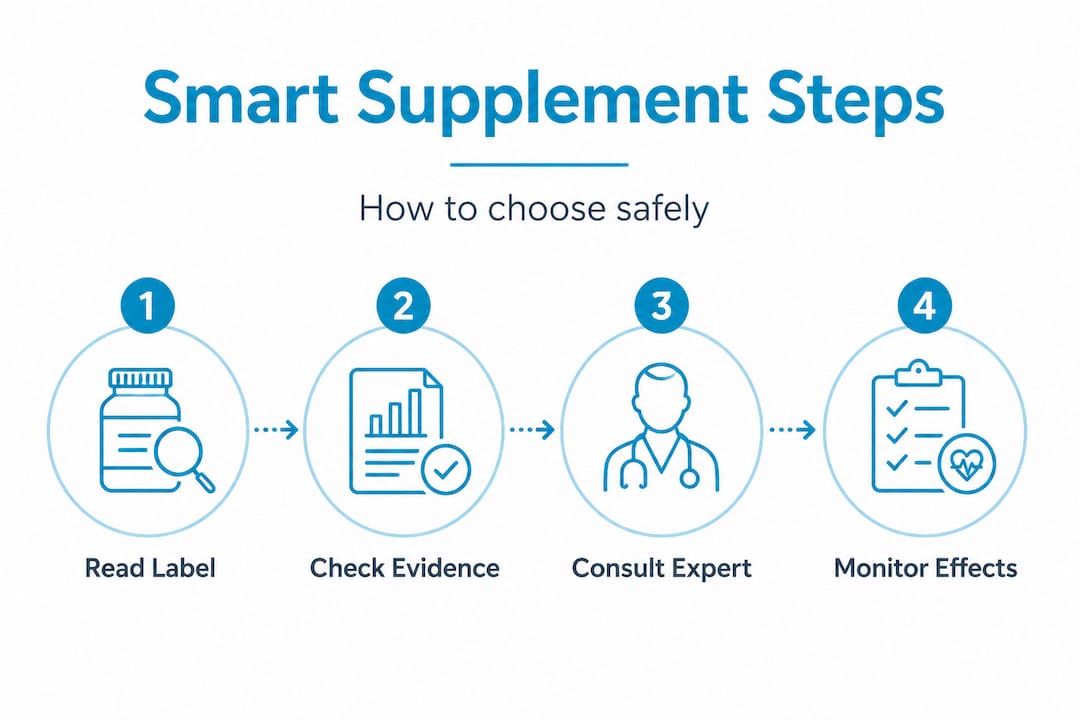
Here’s a practical step-by-step process for choosing a new natural supplement:
- Define your goal clearly. Are you targeting focus, inflammation, immunity, or general wellness? Different goals call for different ingredients.
- Research the key active ingredient using PubMed, NIH databases, or Examine.com. Look for human clinical trials, not just animal studies.
- Evaluate the dose by comparing the product’s serving to the doses used in research.
- Check manufacturing standards. Look for GMP (Good Manufacturing Practice) certification on the label.
- Review third-party certificates of analysis if available on the brand’s website.
- Consult a healthcare professional, especially if you’re pregnant, managing a chronic condition, or taking medications.
- Start with the lowest effective dose and monitor your response over 4 to 8 weeks before drawing conclusions.
Exploring a brand like the SuperNatural Supplements range can give you a useful benchmark for what ingredient transparency and evidence-based formulation actually looks like. When brands publish their scientific rationale and sourcing, that’s a meaningful differentiator.
Why the ‘natural means better’ mindset can backfire
Bringing all these insights together, it’s worth questioning one of the most persistent and genuinely risky beliefs in the supplement world.
We’ve seen how deeply the idea of “natural equals better” runs in wellness culture. It’s emotionally compelling, and we understand why. There’s a real desire to step away from synthetic drugs and toward something that feels more aligned with how your body was designed. That instinct isn’t wrong. But it becomes a problem the moment it overrides critical thinking.
We’ve put years of research into this area, and one pattern stands out consistently: people who are the most committed to natural health approaches are sometimes the least skeptical about the products they choose. They compare ingredients carefully. They read studies. And then they buy a product because the label says “whole plant” or “ancient herbal formula” without checking whether the dose or formulation actually delivers on that promise.
The Merck Manual is clear that natural substances can have powerful effects on the body, including harmful ones. And the regulatory landscape we’ve outlined means that a product marketed as natural has cleared a far lower bar than you might expect. The allure of the “natural” label can actually work against you by lowering your guard at exactly the moment you need to be most discerning.
Our perspective is this: the best approach blends respect for plant-based compounds with the same scientific rigor you’d apply to any health intervention. That means demanding evidence, checking details on curcumin supplements and other key ingredients, understanding how formulation affects what your body actually absorbs, and being honest about your specific health needs.
Nature provides remarkable ingredients. Science helps us understand how to use them effectively. Neither alone is the complete answer.
Looking for high-quality natural supplements?
If this guide has clarified what to look for in a natural supplement, the next step is finding products that actually meet that standard. We built SuperNatural Supplements specifically to close the gap between promising natural ingredients and real, measurable results.
Our patented BioSoluble Curcumin process dramatically improves how your body absorbs curcumin, addressing the number one reason standard turmeric supplements underperform. For brain health, natural cognitive supplements like BrainBoost are formulated for advanced cognitive support using well-researched active compounds. BodyBoost is designed for superior immune support, and BodyControl promotes detoxification and a healthy inflammatory response. For plant-based anti-inflammatory supplements built around genuine bioavailability science, explore the full SuperNatural Supplements collection and see the ingredient transparency for yourself.
Frequently asked questions
What qualifies a supplement as ‘natural’?
A natural supplement is typically plant-derived, but there’s no legal definition for “natural” in the supplement industry. The NIEHS confirms that the term is not formally regulated, so always evaluate ingredient origins, processing methods, and sourcing transparency directly.
Are natural supplements safe to take every day?
Many natural supplements can be taken daily, but natural does not mean risk-free. Side effects and interactions are possible, so consult a healthcare professional before making any supplement a daily habit, especially if you have existing health conditions or take medications.
Do natural supplements need FDA approval?
No. Because dietary supplements are regulated as food, not drugs, manufacturers are not required to obtain FDA approval before selling their products. This places a greater responsibility on consumers to evaluate product quality independently.
How can I tell if a supplement is right for focus, inflammation, or wellness?
Start by researching the specific active ingredient for your goal and checking whether it has been studied in human trials at the dose listed on the product. Research confirms that many botanical supplement benefits are limited by bioavailability and formulation quality, so those factors matter as much as the ingredient itself. A qualified healthcare professional can help you narrow down the best fit.
Recommended
- Natural supplements for brain health and inflammation – SuperNatural
- Curcumin absorption explained: maximize benefits for health – SuperNatural
- How to support brain health: step-by-step habits that work – SuperNatural
- SuperNatural Supplements
- Why independently verified supplements offer safety and trust
- Herbal supplements: a practical guide for women 40+ – Caribella
This web site is provided for educational and informational purposes only and does not constitute providing medical advice or professional services. Always consult with a qualified and licensed physician or other medical care provider. Statements have not been evaluated by the Food & Drug Administration. This product is not intended to diagnose, treat, cure, or prevent any disease.